
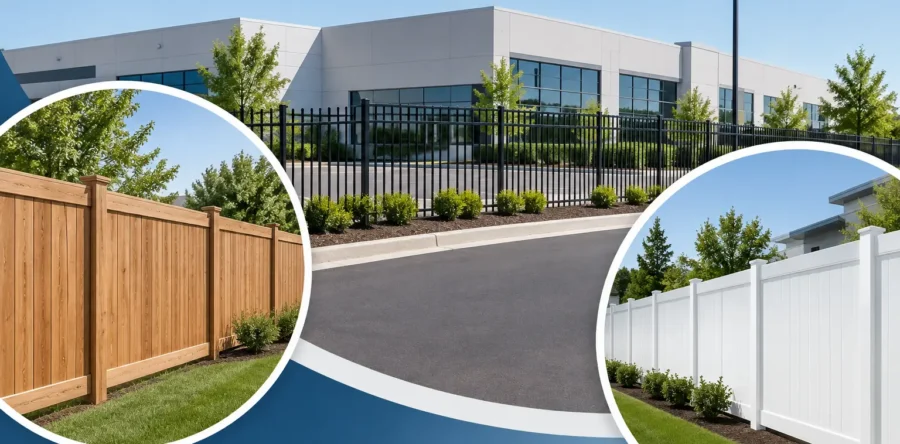
A commercial lot fence has to do more than mark a property line. It may need to discourage trespassing, protect equipment, direct vehicle traffic, keep customers away from hazardous areas, and still present a professional face to the public. The best fencing for commercial lots is not one universal material. It is the system that matches what is on the property, how the lot is used, and how much security, visibility, and privacy the owner actually needs.
A low bid can look attractive until weak posts begin leaning, gates drag, coatings fail, or a poorly planned fence creates blind spots around valuable assets. Choosing the right material matters, but installation quality and structural design matter just as much.
What the Best Fencing for Commercial Lots Must Do
Start with the purpose of the enclosure. A small professional office may want a clean boundary and a secure dumpster area. A contractor yard, storage lot, apartment property, agricultural operation, or equipment yard may need a much more durable perimeter with controlled entry points. Trying to solve both situations with the same fence specification is where many projects go wrong.
A well-designed commercial fence should address four practical concerns: security, durability, access, and appearance. Security means more than fence height. It includes the ability of the fence, posts, rails, and gates to resist impact and tampering. Durability means selecting materials that hold up under sun, wind, moisture, daily use, and occasional abuse. Access means planning gates around the vehicles, deliveries, and people who must use the site. Appearance matters because a fence is often the first thing a tenant, customer, or prospective client sees.
Southern California properties also face conditions that should not be ignored. Coastal air, intense UV exposure, dry heat, wind, and changing soil conditions can shorten the service life of underbuilt fencing. A quality installation begins with materials and post systems selected for the environment, not just the cheapest package available.
Chain-Link Fencing for Security and Visibility
For many commercial lots, chain-link remains the practical workhorse. It is cost-effective for large perimeters, provides clear sight lines, and can be installed at heights that make sense for the security level of the property. It works especially well around storage yards, service areas, sports courts, utility zones, agricultural land, and equipment enclosures.
The real difference is in the specification. Light-gauge fabric and undersized framework may be acceptable for a limited-use boundary, but they are not the right choice for a high-traffic commercial site. Heavier-gauge chain-link fabric, substantial terminal posts, properly braced corners, and well-built gates create a system that can handle regular use. Galvanized components help fight corrosion, while vinyl-coated chain-link can offer a more finished appearance and another layer of protection.
Chain-link is not ideal when privacy is the primary goal. Privacy slats can reduce visibility, but they also change how wind moves through the fence and may not provide the polished look desired for a customer-facing property. For sites with both public-facing and secure service areas, it often makes sense to use different fence styles in different locations.
Gates Are the Weak Point if They Are Underbuilt
A strong perimeter is only as reliable as its gates. Commercial gates need enough width for the largest vehicle that will use them, plus hardware designed for the gate’s weight and frequency of use. A gate that is too narrow causes daily frustration. A gate with inadequate posts or poor alignment will sag, scrape, and eventually become a security problem.
Consider where delivery trucks turn, where employees enter, and whether a gate needs to remain open during business hours. Swing gates can be an excellent choice where there is adequate clear space. Sliding configurations are often better where driveway depth is limited or vehicle flow needs to be managed more tightly. The correct answer depends on the lot layout, not a one-size-fits-all recommendation.
Vinyl Fencing for Clean, Low-Maintenance Areas
Commercial vinyl fencing is a strong option for properties that need privacy, a clean appearance, and less ongoing maintenance. It is often a good fit for multifamily properties, office buildings, storefront service areas, day care boundaries, trash enclosures, and locations where the fence is highly visible to customers.
High-grade vinyl will not rot, splinter, or require routine painting like many traditional materials. However, not all vinyl fencing is made or installed to the same standard. Thin panels, weak rails, and poor post reinforcement can lead to cracking, movement, and premature failure. This is particularly true where gates are attached or wind exposure is significant.
For a commercial vinyl fence, ask how posts are reinforced, how rails are supported, and what structural components are used at corners and gate openings. Metal post systems, including Postmaster metal posts in appropriate applications, offer substantially more stability than a basic wood-post approach. They help create a straighter, stronger fence line and eliminate the rot concern associated with buried wood posts.
Vinyl is not the right answer for every large perimeter. It typically costs more than basic chain-link, and it can be a poor match for areas where heavy equipment regularly makes contact with the fence. Its value is strongest where appearance, privacy, and low maintenance are priorities.
Wood Fencing for Custom Privacy and Appearance
A well-built wood fence can give a commercial property warmth and a more tailored appearance, particularly around offices, hospitality spaces, mixed-use properties, estates, and customer-facing boundaries. It also allows for custom heights, board layouts, trim details, and designs that complement the building or landscape.
The trade-off is maintenance. Wood is a natural material, so it needs proper construction and periodic care to look its best over time. Poor-quality lumber, insufficient fastening, and weak posts can turn a new fence into a repair project much sooner than expected. The fence should be designed with drainage, ground clearance, hardware quality, and long-term exposure in mind.
For owners who want the appearance of wood without relying on wood posts below grade, a Postmaster metal-post system can be an excellent structural upgrade. The steel posts are concealed behind the fence boards, so the finished side retains a traditional wood look while gaining a more durable backbone. It is a smart consideration for privacy fences where straight lines and long-term stability are important.
Do Not Overlook Dumpster Enclosures and Interior Barriers
Not every commercial fencing need involves the outer perimeter. Dumpster enclosures, air-conditioning equipment barriers, employee-only areas, pool barriers, pet areas, and loading-zone separations can improve both security and day-to-day organization.
These smaller projects deserve the same attention to materials and layout. A dumpster enclosure should allow service access without creating a loose, difficult-to-operate gate. An equipment screen should protect expensive assets while still allowing technicians to work. Interior barriers should guide foot traffic without creating unnecessary obstacles for staff or customers.
Matching these elements to the primary perimeter fence can make the entire property look intentional rather than pieced together over several years.
How to Compare Commercial Fence Proposals
Two estimates can describe the same fence type yet represent very different projects. Before comparing price, compare the details that determine whether the fence will last. A clear proposal should identify the material type, fence height, framework or post size, gate construction, hardware, removal work if applicable, and the scope of cleanup.
Be cautious of vague language such as “commercial grade” without supporting details. Ask what makes the system commercial grade. Is the fabric heavier? Are the posts larger? How are corners braced? What is included at gate openings? Is the contractor licensed, bonded, and insured for fencing work? A professional contractor should be comfortable answering direct questions and putting the scope in writing.
It is also wise to consider the cost of disruption. A fence contractor working around active tenants, customers, employees, or stored equipment should communicate clearly, protect the site, and leave a clean job area. The least expensive quote may not account for those responsibilities.
Build for the Lot You Have Now and the One You May Have Later
The best commercial fence is usually the one that anticipates change. A growing business may need a wider gate later. A vacant parcel may become an active storage yard. A property owner may add cameras, controlled access, landscaping, or additional tenant areas. Planning the post locations, gate positions, and fence style with future use in mind can prevent expensive rework.
All Season Fencing helps property owners evaluate those practical decisions before construction begins, with direct recommendations based on the site rather than a canned sales pitch. If you are considering a new commercial perimeter or replacing a failing fence, bring photos, measurements, and a clear picture of how the lot operates. A fast, professional proposal should give you the information needed to choose a fence built for the work ahead.