
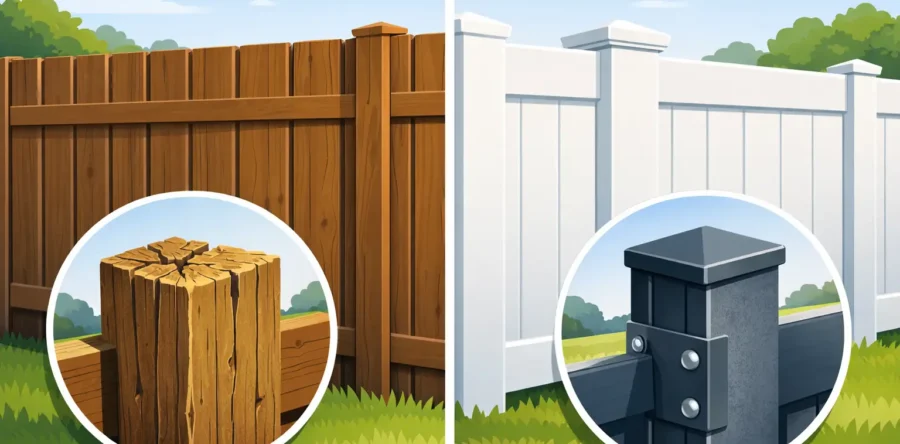
A wood fence rarely fails all at once. It starts with one panel leaning after a windy week, a post that feels soft near the ground, or a line that no longer looks straight from the curb. Postmaster metal fence posts address the structural weak point behind many aging wood fences: the vertical posts that carry the entire load.
For homeowners and property managers, the difference is not just a cleaner-looking fence today. It is less worry about rot below grade, fewer repairs caused by shifting posts, and a better chance that a privacy fence will still look level after years of sun, irrigation, wind, and seasonal weather. The right post system is a construction decision that pays off long after the boards are installed.
Why Wood Posts Are Often the First Thing to Fail
Traditional wood posts can make sense for certain projects, especially when budget is the driving factor or a repair must match an existing fence. But the section of a wood post buried in soil is exposed to moisture, insects, and gradual decay. Even pressure-treated lumber has a service life, particularly where irrigation keeps the soil damp or drainage is poor.
A fence can look fine above ground while the post below ground is weakening. Once that happens, boards may sag, fasteners can loosen, and the fence begins to rack under wind pressure. Replacing one failed wood post in an older fence can also reveal that nearby posts are not far behind.
Southern California adds another layer of stress. Intense sun dries and moves wood over time, while Santa Ana conditions and coastal winds can place serious lateral pressure on a privacy fence. A fence is not simply a row of boards. It is a large surface that catches wind, and its posts must resist that force without twisting or leaning.
What Makes Postmaster Metal Fence Posts Different
Postmaster metal fence posts are engineered steel posts designed to be installed inside the fence line, behind the wood boards. Their profile provides stiffness in more than one direction, helping the fence resist side-to-side movement and wind load better than a typical wood post of comparable size.
When properly planned and installed, the steel post is largely concealed by the finished wood fence. From the yard or street, the visual focus remains on the redwood or cedar boards, rails, trim, and layout. The structure is upgraded without turning a warm, natural wood fence into an industrial-looking installation.
The primary benefit is simple: steel does not rot. The post still requires correct installation, suitable concrete footings, and compatible fasteners, but it removes the common buried-wood failure point. Many Postmaster systems also carry long-term or lifetime limited warranty coverage, subject to the manufacturer's terms. A contractor should be clear about what is covered and what proper installation requires.
Strength Where a Fence Needs It Most
A quality fence is only as dependable as its foundation and framing. Steel posts hold their shape, which helps keep fence sections aligned and helps prevent the waviness that can develop as wood posts age. This matters most on tall privacy fencing, long straight runs, exposed lots, and properties where wind regularly sweeps across open space.
Post spacing, footing depth, soil conditions, fence height, and the design itself still matter. No post system can compensate for undersized footings, rushed concrete work, or a layout that ignores a slope. Postmaster posts are strong components, not a shortcut around sound fence construction.
Postmaster Metal Fence Posts for Wood Privacy Fences
For many homeowners, a wood privacy fence offers the best mix of appearance, flexibility, and repairability. Redwood and cedar can be built in clean modern lines, classic board-on-board patterns, picture-frame designs, or custom layouts suited to the property. Pairing that wood finish with Postmaster metal fence posts creates a fence that looks traditional while performing more like a purpose-built perimeter system.
This approach is particularly useful when replacing a tired fence between close neighbors. The finished fence can provide privacy and a polished shared boundary, while the steel framing offers better long-term stability. It also works well for pet containment, pool-adjacent boundaries where applicable code requirements are met, and side-yard privacy runs that take regular wind.
A properly built wood fence will still need care. Boards are natural material, so checking for loose fasteners, surface wear, and water exposure remains worthwhile. Steel posts reduce one major maintenance concern, but they do not eliminate the need to maintain the wood attached to them.
Where Steel Posts Make the Most Sense
Postmaster posts are often a smart upgrade when a fence is taller, highly visible, or costly enough that early failure would be frustrating. They are especially worthwhile for properties with poor drainage, frequent sprinkler overspray, known termite activity, or an old fence line where wood posts have repeatedly failed.
They can also be a practical choice for ranch, estate, and commercial perimeter projects that need a wood-fence appearance but cannot afford constant post replacement. On a long property line, replacing failed posts one at a time becomes expensive and disruptive. Starting with a stronger framework can provide better value over the life of the fence.
That said, steel posts are not automatically the best answer for every project. A short decorative fence, a temporary enclosure, or a small repair that must blend into an existing wood-post system may call for a different approach. Good contractors explain the options, the cost difference, and the expected service life rather than pushing one material for every job.
Installation Details That Protect the Investment
The post itself is only part of the system. The installation process determines whether the finished fence performs as intended. A professional crew begins by confirming property lines, access, local requirements, finished height, and the location of utilities before digging. Those steps protect the customer from preventable problems that do not show up in a low initial quote.
Post holes should be sized for the fence design and site conditions, then set at consistent depth and alignment. Concrete should be placed and finished correctly, with posts plumbed before the material cures. On sloped terrain, the crew must decide whether the fence should step with the grade or follow it, because that decision affects appearance, board cuts, and drainage.
Fasteners matter, too. Exterior-rated screws and brackets compatible with the steel posts help prevent staining, premature corrosion, and loose connections. The rails and boards need accurate spacing so the fence can remain straight while allowing natural wood movement. Clean lines come from careful layout, not last-minute adjustments after the posts are already set.
Do Not Overlook Drainage and Irrigation
A steel post will not rot, but standing water is still hard on a fence system. Poor drainage can shift soil, undermine concrete, and keep lower boards wet. Irrigation heads that spray the fence every day can discolor wood and shorten the life of finishes. Addressing these site conditions during planning is far less expensive than correcting damage after installation.
For coastal and high-moisture locations, material selection deserves additional attention. Galvanized steel is made for outdoor use, but compatible hardware and proper installation remain essential. Ask what post finish, screws, brackets, and wood species are being proposed, and expect a direct answer.
A Better Way to Compare Fence Estimates
When comparing proposals, do not stop at the total price or the number of linear feet. Ask what posts are included, how deep they will be set, whether concrete is included, what lumber species will be used, and how the contractor plans to handle slopes, old fence removal, and cleanup. A quote that simply says “wood fence” leaves too much room for inferior materials and shortcuts.
Licensed contractors should provide a written scope that makes the structure understandable. California customers should also verify licensing, bonding, and insurance, and follow applicable CSLB rules regarding contract deposits and payment schedules. Those protections matter when the work involves a long property line, shared boundaries, or custom construction.
At All Season Fencing, the goal is to explain the structural choices before the work starts, so customers can select a fence built for their property instead of accepting a one-size-fits-all package. A clear proposal should tell you what you are getting and why it is being recommended.
A fence should not become a recurring repair project a few seasons after installation. If you are planning a new wood privacy fence or replacing a line with failing posts, ask for a proposal that compares wood posts and Postmaster steel framing honestly. The best choice is the one that fits your site, budget, and long-term expectations - with no guesswork buried below ground.