
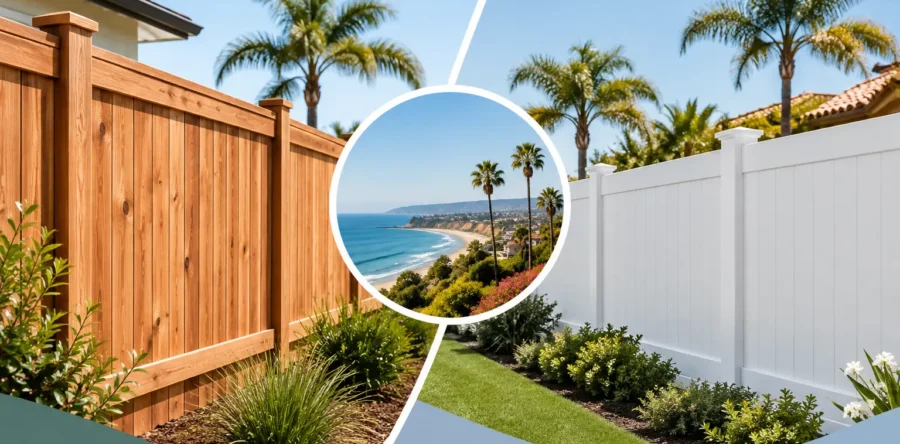
A fence can look finished on installation day and still be the wrong fence for the property. The best fence materials do more than match a home’s exterior. They need to handle sun, coastal air, wind, pets, daily use, and the structural demands created by gates, slopes, and long runs.
For homeowners and property owners in Southern California, material selection should begin with the job the fence must perform. Privacy, pet containment, curb appeal, security, and large-property boundaries all call for different solutions. A quality installation also depends on what is below and behind the visible panels: posts, fasteners, gate framing, and proper layout matter as much as the material you see from the street.
Start With the Fence’s Real Job
It is easy to choose a fence based on a photo. It is smarter to decide what problem the fence needs to solve first. A backyard privacy barrier has different demands than a ranch enclosure. A side-yard gate used several times a day needs stronger support than a decorative front boundary.
For a family with dogs, the priority may be secure containment with no weak spots near the ground or gate. For a homeowner replacing an aging wood fence, the concern may be reducing future maintenance without sacrificing privacy. A business, estate, or agricultural property may need a durable perimeter system that can cover substantial distances and remain serviceable over time.
Before selecting a style, consider the amount of privacy needed, whether children or pets will use the space, the exposure to wind and sun, the condition of adjoining fencing, and how often gates will be opened. These practical details prevent an attractive choice from becoming an expensive compromise.
Vinyl Fence Materials for Low-Maintenance Privacy
High-quality vinyl fencing is a strong choice for homeowners who want a clean, consistent appearance without regular painting, staining, or concerns about rot. It is especially well suited to privacy fencing, pool-area boundaries, pet enclosures, and properties where a bright, orderly finish matters.
Not all vinyl is built alike. Thin, low-grade panels can feel flexible, discolor over time, or become more vulnerable to cracking under impact. Quality vinyl fencing uses substantial rails, properly reinforced gate sections, and materials designed for long-term outdoor exposure. The installation method matters just as much. Posts need to be set correctly, rails need secure engagement, and gates need framing that resists sagging.
Vinyl is not the answer for every property. Homeowners who want a highly individualized look, an irregular custom layout, or the natural character of wood may prefer another material. But for dependable privacy with minimal upkeep, it is one of the most practical options available.
Wood Fencing Brings Warmth and Custom Design Options
Wood fencing remains a popular choice because it can be tailored to the property. It works well for custom privacy designs, decorative top treatments, stepped layouts on sloped ground, and projects where the fence needs to complement a traditional home, garden, or estate setting.
The trade-off is maintenance. Wood is exposed to sun, moisture, temperature changes, and ground contact over its lifetime. Even quality lumber requires periodic attention to preserve its appearance and extend its service life. Homeowners should expect to inspect the fence, address damaged boards promptly, and maintain protective finishes as needed.
A wood fence should never rely on weak structural components simply because the boards look good. Posts and rails carry the load, particularly along long privacy runs and at gates. A properly planned wood fence can be both attractive and durable, but the construction standard needs to match the size and purpose of the project.
Chain-Link Is Practical for Boundaries and Containment
Chain-link fencing is often the most straightforward choice for functional boundaries, pet areas, side yards, commercial spaces, and larger properties. It provides visibility, dependable containment, and a practical cost profile for projects where privacy is not the main objective.
For ranch, farm, and large-property applications, chain-link can create a clear, durable perimeter without the material cost of a full privacy fence. It can also be adapted with privacy slats or screening where partial visual separation is needed, although those additions increase wind load and should be planned carefully.
The quality of chain-link work depends on more than the mesh. Terminal posts, line posts, top rails, tension bars, fittings, and gate hardware all affect performance. A chain-link fence that is poorly tensioned or supported can lean, loosen, or develop unsightly waves. Good materials and correct installation keep the system tight and reliable.
Fence Materials Need Strong Posts
The most expensive fence panels cannot compensate for posts that shift, rot, bend, or fail under pressure. Posts are the structural backbone of nearly every fence, and they deserve more attention during the estimate process.
All Season Fencing uses high-grade materials and offers Postmaster metal posts for projects that need greater long-term support. These steel posts are concealed behind the fence line on many wood installations, preserving the finished look while providing strength where it matters. They are particularly valuable for privacy fencing exposed to wind, long runs where alignment matters, and gates that place repeated stress on the structure.
A fence is only as straight and stable as its supporting system. Ask what type of posts will be used, how gate posts will be reinforced, and whether the proposed materials are appropriate for the height and exposure of the fence. Clear answers now can prevent leaning sections and premature repairs later.
Match the Material to Southern California Conditions
Southern California presents a mix of conditions that can be hard on fencing. Inland heat, direct sun, coastal moisture, sandy ground, and seasonal wind all influence how a fence performs. The right choice in Ventura or Oxnard may not be the same as the right choice for an exposed hillside, a large Bakersfield property, or a shaded backyard with limited airflow.
For coastal areas, materials and hardware should be selected with long-term outdoor exposure in mind. For windy locations, a solid privacy fence may need more substantial posts and careful spacing because it acts like a sail. For large properties, practical materials that are serviceable and economically sensible over long distances often make the most sense.
There is no honest one-material-fits-all recommendation. A contractor should ask questions about your site rather than pushing the same product on every customer. That conversation is where a fence design becomes a tailored solution instead of a generic installation.
Questions to Ask Before Choosing Fence Materials
A professional estimate should explain what is being installed, not just provide a single total. You should know the panel or board material, post type, rail configuration, gate construction, hardware quality, and any maintenance expectations. If a price seems unusually low, ask what has been omitted or downgraded.
It is also wise to verify that the contractor is properly licensed, bonded, and insured. Written estimates, clear communication, and a clean job site are not extras. They are signs of a contractor who takes accountability seriously and respects your property.
Be cautious of proposals that focus only on the visible fence. Inferior posts, undersized framing, light-duty gate hardware, and low-grade panels can reduce the initial price while creating problems that show up after the contractor has left. A fair proposal should make the material choices understandable so you can compare value, not just totals.
A Fence Should Fit Your Property for Years
The right fence material is the one that fits your goals, exposure, budget, and expected maintenance level without cutting corners on structure. A simple chain-link enclosure can be the right solution for one property, while a reinforced vinyl privacy fence or a custom wood build may be better for another.
If you are weighing options, bring photos, measurements, and a clear description of how you use the space to the conversation. Seth at All Season Fencing can provide a fast, friendly, professional proposal and help you choose a fence that protects your property long after installation day.