
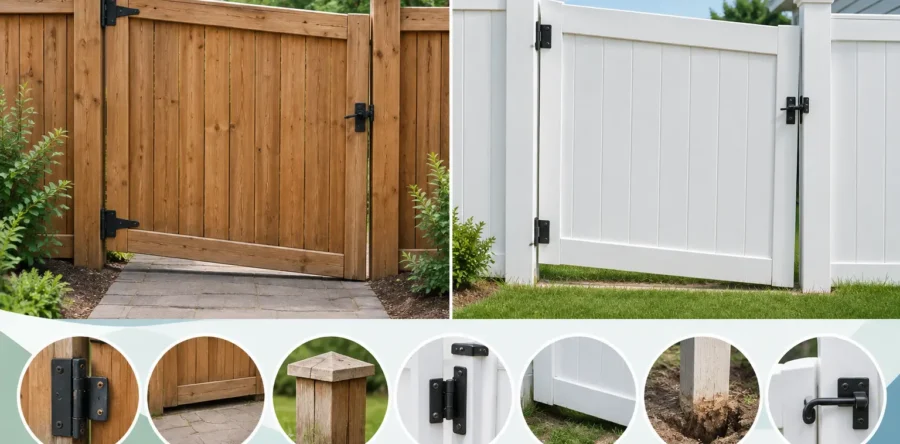
A gate that drags across the ground, scrapes its latch, or needs a hard lift to close is more than an everyday annoyance. It can leave a side yard less secure, create an escape point for pets, and put added strain on the entire fence line. So, what causes gate sagging? Usually, the problem starts with inadequate support, but the visible droop at the latch side may be the result of several issues working together.
A well-built gate is a moving structure. Unlike a stationary fence panel, it places repeated force on its hinges, posts, frame, fasteners, and surrounding soil every time it opens and closes. Identifying the true cause before attempting a repair is the difference between a lasting correction and a temporary adjustment that fails again in a few months.
What Causes Gate Sagging in Most Fences?
Gate sagging happens when the gate opening can no longer carry the weight and movement of the gate in proper alignment. The latch side drops because gravity is always pulling on it, while the hinge side and gate post are expected to resist that pull.
On a light garden gate, a minor hinge adjustment may solve the problem. On a wide driveway gate, a tall privacy gate, or a heavily used side gate, the cause is often structural. A good repair starts by checking the post, the hinge connection, the gate frame, and the ground conditions rather than immediately replacing hardware.
Weak, leaning, or poorly set gate posts
The gate post is the foundation of the system. If it leans toward the gate opening, rotates under load, or moves in the soil, the entire gate will lose alignment. This is one of the most common reasons a gate begins to drag or no longer reaches its latch.
Posts can shift for several reasons. Soil can settle, seasonal moisture can change the ground around the post, and a post that was not set deep enough may not have enough resistance to handle a heavy gate. Wood posts can also decay below grade, where damage is difficult to see until the post becomes loose. On older fences, a post may look acceptable above ground while the buried portion has already lost much of its strength.
In coastal and inland Ventura County conditions, moisture exposure, irrigation, and sun can each contribute to material movement over time. A professional inspection should include a physical check of the post, not just a visual look at the gate.
Undersized hinges or loose fasteners
Hinges carry the full weight of a gate every day. When hinges are too small for the gate, made from light-duty material, or attached with short screws, they can bend, pull loose, or gradually enlarge the mounting holes. The gate may start out level after installation, then sag as the hardware works under repeated use.
Loose lag bolts and screws are especially common on wood gates. Tightening them may offer a short-term improvement, but it will not be a dependable repair if the surrounding wood is split, softened by decay, or stripped out. The hardware needs solid material behind it.
For metal-framed or vinyl gates, the issue may be inadequate internal reinforcement or hardware that was not designed for the gate's width and weight. Quality hinges matter, but they cannot compensate for an unstable post or a weak frame.
A gate frame without proper bracing
A square gate does not stay square by itself. The weight at the latch side naturally pulls the frame into a parallelogram shape unless the gate has adequate diagonal bracing or a properly engineered metal frame.
For a traditional wood gate, the diagonal brace generally needs to run from the lower hinge corner up to the upper latch corner. This arrangement transfers the hanging weight back toward the supported hinge side. A brace installed in the opposite direction may look similar but does far less to resist sagging.
Wide gates need particular attention. As the span increases, so does the leverage placed on the frame and posts. Adding more boards to make a gate match a privacy fence can make it significantly heavier. A custom gate should be designed around that weight from the beginning, not treated like a standard fence panel with hinges attached.
Gate Design Can Create a Sagging Problem
A gate can be built with quality materials and still fail early if its design does not suit its size, use, and location. This is where shortcuts often become expensive.
A tall solid privacy gate catches wind like a sail. A gate used several times daily needs stronger components than one opened only for occasional yard access. Double gates must be aligned with each other and supported so neither leaf drifts over time. Gates supporting decorative features, heavy pickets, or added screening require a frame and post system built for the additional load.
The right solution depends on the application. A narrow pedestrian gate may only need a reinforced wood frame and quality hinges. A larger opening may call for a steel-framed gate, upgraded posts, or a wheel support where appropriate. Wheels can reduce load in some designs, but they are not a cure for a leaning post, uneven ground, or a poorly built frame.
Rust, rot, and long-term material wear
Outdoor exposure eventually affects every fencing material, though not at the same rate. Rust can weaken steel hardware and fasteners. Wood can crack, split, or rot around hinge attachment points. Vinyl gates can become misaligned when internal reinforcement is insufficient or when hardware attachments are not properly supported.
This does not mean every sagging gate requires full replacement. Sometimes the gate structure is sound and only the hardware or one post needs attention. Other times, trying to preserve a rotted frame or deteriorated post simply delays the inevitable. An honest evaluation should distinguish between a repairable component and a system that has reached the end of its service life.
Signs the Problem Is More Than a Simple Adjustment
A gate that is slightly out of alignment after a hard impact may respond to a hinge adjustment. However, these warning signs usually point to a deeper issue:
- The hinge post visibly leans, twists, or moves when the gate is opened.
- The gap above the gate is wider on one side than the other.
- The gate frame is no longer square, with corners separating or boards splitting.
- Hinges, bolts, or screws repeatedly loosen after being tightened.
- The gate drags only during certain weather conditions, suggesting post or soil movement.
- The latch must be forced into place, or the gate will not stay closed.
Ignoring these signs can lead to a damaged latch, broken hinges, cracked fence sections, or a gate that becomes unsafe to operate. This is particularly important for gates used to contain dogs, secure pool-adjacent areas, or control access to a side yard or ranch property.
How to Prevent Gate Sagging During Installation
The best gate repair is prevention through proper construction. Start with posts selected and installed for the actual gate load, not just the appearance of the fence. The heavier, wider, taller, or more frequently used the gate, the more critical post strength becomes.
Use hinges and fasteners rated for the gate's weight. Build a frame with correct bracing and allow appropriate clearance for normal movement without leaving excessive gaps. For privacy, pet containment, and high-use access gates, structural reinforcement should be part of the original plan, not an afterthought.
Postmaster metal posts are one option that can provide far greater resistance to rot, warping, and post movement than conventional wood posts when used in the right fencing design. They are especially valuable where long-term straightness and strength are priorities. Material selection should always match the fence style, gate size, site conditions, and the level of daily use.
When to Call a Fence Professional
Homeowners can often identify an obvious loose hinge, but major gate repairs require more than lifting the gate and adding a new screw. If the post has shifted, the frame is distorted, or the gate is heavy, an improper repair can transfer the strain to another part of the fence.
A licensed fencing contractor can determine whether the problem is the hardware, the gate itself, the supporting posts, or a combination of all three. That diagnosis matters because a quality repair protects your investment instead of covering up a structural failure. It also helps ensure the repaired gate opens smoothly, latches securely, and looks right with the rest of the property.
At All Season Fencing, the focus is on building and repairing gates with the material quality and structural support they need to last. If your gate is dragging, leaning, or no longer protecting the space it should, contact Seth for a fast, friendly, informative, free professional proposal. A clear assessment now can prevent a small alignment issue from becoming a larger fence repair later.