
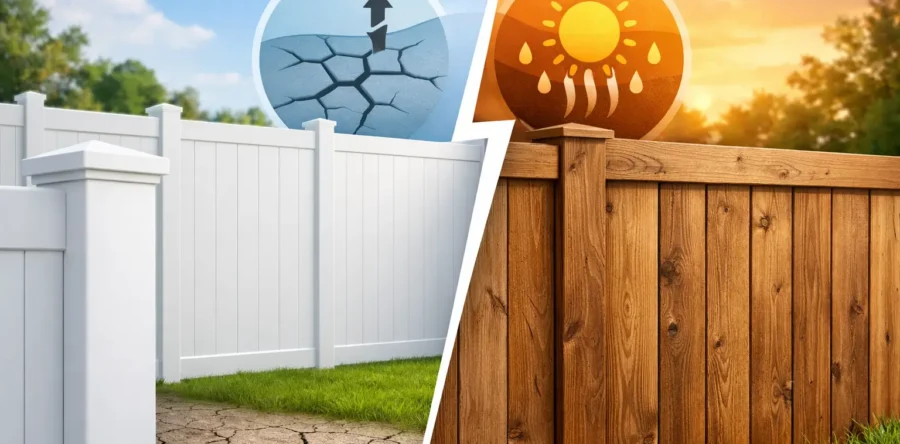
A fence replacement often starts with one visible problem: boards leaning into the neighbor’s yard, peeling paint, a gate that no longer latches, or a privacy line that has become an eyesore. The larger decision is what replaces it. When comparing vinyl versus wood fencing, homeowners are not simply choosing a color or style. They are choosing the level of maintenance, structural strength, appearance, and long-term cost they want to live with.
For properties in Ventura County and throughout Southern California, sun exposure, coastal moisture, irrigation, pets, wind, and everyday use all matter. A good fence material can perform poorly when it is installed with undersized posts, weak hardware, shallow footings, or low-grade panels. The right answer depends on the job, but the installation quality should never be an afterthought.
Vinyl Versus Wood Fencing: The Core Difference
Vinyl fencing is built for homeowners who want a clean, consistent privacy barrier with very little routine upkeep. Quality vinyl does not rot, need painting, or attract termites. A rinse with a hose and occasional mild cleaning are usually enough to keep it looking presentable. For busy families, rental properties, and owners who want their weekends back, that is a meaningful advantage.
Wood fencing offers a natural appearance that vinyl cannot fully duplicate. It can be tailored to uneven terrain, custom heights, decorative top treatments, gates, ranch-style layouts, and distinctive property lines. Wood also gives a project more design flexibility when a fence needs to blend with an older home, mature landscaping, or a specific architectural style.
The trade-off is simple: wood is a living material, even after it is milled. It expands, contracts, dries, and weathers. Vinyl is more uniform and lower maintenance, but it requires a properly engineered framework to stay straight and secure over time.
Appearance and Curb Appeal
A wood fence has warmth and variation. Each board has grain, texture, and small differences that create a more organic look. For a home with a traditional, rustic, coastal, or custom landscape design, that character can be the deciding factor. It is also easier to modify later if you want to add a lattice accent, replace a damaged board, or create a one-of-a-kind layout.
Vinyl creates a crisp, orderly appearance. White remains the classic choice, but modern vinyl fencing is also available in neutral tones and wood-look options. It is especially effective for clean-lined privacy fencing, pool-area separation, side-yard barriers, and pet containment where a polished, uniform finish matters.
Neither material is automatically more attractive. A well-built wood fence can look exceptional, while a poorly installed vinyl fence can look flimsy. Match the fence to the architecture of the property and the visual role it needs to serve. A rear-yard privacy wall has different design demands than a front-yard boundary or an estate perimeter.
Maintenance Is Where the Gap Widens
Wood asks for regular attention. Exposure to sun and moisture can lead to fading, checking, splintering, and eventual rot if the material is not maintained. Depending on the product, exposure, and finish, homeowners should expect periodic cleaning and reapplication of a protective stain or sealant. Individual boards, rails, and gate components may also need replacement as the years pass.
Vinyl largely removes those recurring tasks. It will not require paint or stain, and it does not decay like wood. Dirt, sprinklers, algae, and yard residue can usually be handled with water, a soft brush, and a vinyl-safe cleaner. That lower maintenance requirement is often the strongest reason customers choose vinyl.
Still, “low maintenance” does not mean “maintenance free.” Sprinklers should not constantly spray any fence, gate hinges need occasional attention, and heavy impacts can damage a vinyl panel. A vinyl fence should be cleaned when needed and inspected after storms, landscaping work, or a collision from equipment or vehicles.
Strength Comes From the Posts and Installation
The most expensive fence panels in the world cannot compensate for weak posts. This is where many fence projects fail. A contractor may use basic materials, rush the layout, or rely on lightweight posts that move over time. The result is a fence that leans, racks, or develops gate problems long before it should.
Wood posts can be strong and practical, but ground contact is their greatest long-term challenge. Moisture below grade can eventually cause deterioration, even when the visible fence still looks acceptable. Replacing failed wood posts can become a disruptive repair because surrounding panels and rails often need to be removed or supported during the work.
For high-quality vinyl installations, steel-reinforced Postmaster metal posts provide a major structural advantage. They are designed to resist leaning, twisting, and wind-related movement while keeping the clean look of a vinyl fence. The posts are concealed within the fence system, so homeowners get added strength without sacrificing appearance. This matters on long runs, exposed lots, sloped yards, and gates that receive frequent use.
A fence should be designed as a complete system: correct post spacing, proper depth, quality rails, durable fasteners, and gate framing that can handle its weight. If a proposal focuses only on panel price, ask what is supporting those panels.
Upfront Cost and Long-Term Value
Wood fencing is often less expensive at the initial purchase point, particularly for straightforward privacy runs. That can make it a sensible choice when the budget is tight or when a custom design calls for the flexibility of wood.
Vinyl typically costs more upfront because of the material system and the need for precise installation. Over time, however, its reduced maintenance can narrow that difference. Homeowners who would otherwise pay for staining, painting, board replacement, and repeated repairs may find vinyl offers better value across the life of the fence.
There is no honest one-size-fits-all cost answer. The total depends on fence height, access, demolition of the existing fence, slope, gates, layout, material grade, post system, and custom details. A transparent written proposal should identify the material and structural components being used, not leave the important details vague.
For rental homes and commercial properties, vinyl can be especially attractive because it reduces routine maintenance between tenants or during busy operating periods. For a custom residence where the fence is a prominent design element, wood may justify the ongoing care it requires.
Weather, Sun, and Everyday Southern California Use
Southern California does not have harsh winter freezes in most areas, but fences still take a beating. Intense UV exposure can dry and fade wood. Coastal air and damp conditions can increase the need for cleaning and maintenance. Strong winds can expose weak posts and poorly framed gates. Sprinklers that repeatedly hit a fence can accelerate deterioration or leave visible mineral buildup.
Vinyl handles moisture and insects well, and quality material is formulated to withstand outdoor exposure. Its main installation consideration is movement with temperature changes. Properly installed rails and posts allow the system to perform as intended without binding or warping.
Wood can perform well in the same environment when quality lumber, thoughtful construction, and regular protection are part of the plan. It is not a bad choice because it needs maintenance. It is a bad choice only when an owner expects it to behave like vinyl without the required care.
Privacy, Pets, and Gates
Both materials can create excellent privacy and pet-safety barriers, but the details matter. A solid vinyl privacy fence gives a continuous visual screen with few gaps, making it a popular option around backyards, patios, and side yards. It is easy to keep clean when pets lean against it or children leave handprints near a gate.
A wood privacy fence can provide the same screening while offering more custom options for changing grades, unusual corners, decorative features, and transitions to other fence styles. If the goal is to contain a determined dog, prevent gaps at the bottom, and use strong latch hardware, those needs should be addressed in the fence design rather than assumed.
Gates deserve special attention in either material. They are moving parts, and they reveal poor workmanship quickly. A properly supported gate should operate smoothly, latch securely, and remain aligned through regular use. Heavy or wide gates may need reinforced framing and a stronger support plan than the rest of the fence run.
How to Make the Right Choice
Choose vinyl when you want a consistent finished appearance, minimal ongoing maintenance, and a durable privacy or containment system supported by high-quality posts. It is a strong fit for homeowners who value long-term convenience and do not want staining or painting on their maintenance list.
Choose wood when natural character, custom detailing, or adaptable design is your priority and you are prepared to maintain it. A professionally built wood fence can be beautiful and durable, but it should be treated as an exterior feature that needs periodic care.
Before signing with any contractor, verify licensing and bond status, review the written scope, and ask direct questions about post materials, gate construction, material grade, cleanup, and warranty coverage. California’s contractor down-payment rules also exist to protect customers, so be cautious of anyone pushing for excessive money before work begins.
All Season Fencing helps property owners evaluate the material, structure, and design behind the fence - not just the price printed at the bottom of an estimate. A fast, friendly, professional proposal should give you enough information to make a confident decision, whether your property needs low-maintenance vinyl, a custom wood build, or a stronger perimeter solution that will serve it well for years.