
A fence rarely fails all at once. It starts with a gate that drags, a leaning section after wind, loose boards, rusting hardware, or posts that no longer hold a straight line. This Oxnard fence replacement guide helps property owners recognize when repairs have stopped making financial sense and what to look for in a replacement built for long-term performance.
For a family home, a new fence may mean privacy, pet safety, and a cleaner-looking yard. For a ranch, estate, or small business, it may be the perimeter system that protects access, defines property use, and holds up across a much larger span. The right replacement is not simply about choosing a panel style. It is about matching material, structure, layout, and installation quality to the job.
When Fence Repair Becomes Fence Replacement
A few damaged boards or a single loose gate hinge can often be repaired. Replacement becomes the smarter decision when the underlying structure is failing. If multiple posts are leaning, wood is deteriorating near ground level, rails are splitting, or several sections have been patched over time, fixing isolated areas may only postpone a larger problem.
Look closely at the posts. They carry the load of the entire fence, yet they are often the first component compromised by moisture, soil movement, impact, or poor original installation. A fence can have attractive new boards and still fail early if its posts are undersized, rotted, poorly set, or spaced incorrectly.
Replacement is also worth considering when the fence no longer serves the property. A low, open fence may not provide enough privacy. An aging wood enclosure may not contain an active dog. A light-duty boundary fence may not be appropriate for a commercial lot, agricultural property, or large estate. In these cases, rebuilding gives you an opportunity to solve the actual problem rather than recreate an outdated setup.
Start With the Purpose of the Fence
The best material is not the same for every Oxnard property. Before comparing colors or panel profiles, decide what the fence must do every day. Privacy, security, pet containment, pool-area separation, curb appeal, wind exposure, and low maintenance all affect the right recommendation.
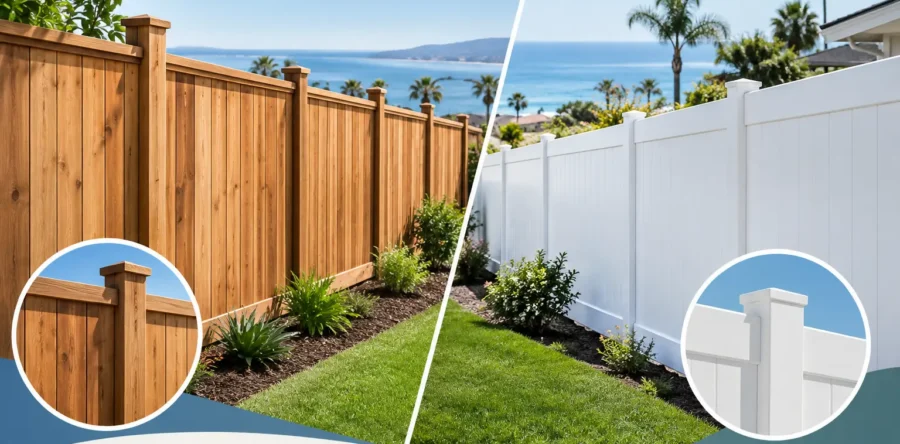
For many homeowners, vinyl fencing is an excellent fit when they want a clean finished appearance without recurring painting, staining, rot concerns, or routine board replacement. High-quality vinyl systems can provide strong privacy and a consistent look, but the installation details matter. Thin, low-grade panels and weak internal support can crack, sag, or perform poorly over time. A quality installation starts with dependable components and a properly engineered post system.
Wood fencing remains a practical choice for customers who prefer a traditional appearance or need a custom layout. The longevity of a wood fence depends heavily on material grade, fasteners, drainage, post installation, and the owner’s willingness to maintain it. It can be a strong, attractive solution, but it should be selected with realistic expectations about weathering and periodic care.
Chain-link fencing is often the efficient choice for durable boundaries, pet areas, utility spaces, larger properties, and commercial applications. It is not designed to provide the same visual privacy as a solid fence, although privacy slats or screening may be appropriate in certain settings. Its value is straightforward: a properly tensioned, well-framed chain-link system can cover significant distances reliably.
Why Posts Matter More Than Most Homeowners Realize
Fence panels receive the attention because they are visible. Posts determine whether those panels stay straight. This is especially true for privacy fences, gates, and long runs that face wind pressure.
All Season Fencing frequently recommends Postmaster metal posts where the project calls for greater strength and long-term stability. Unlike conventional wood posts that can deteriorate below grade, Postmaster posts are built to resist the conditions that commonly cause a fence line to lean or fail. They can be concealed within the fence design, preserving the appearance of a traditional wood or vinyl fence while providing steel support where it matters most.
That does not mean every project requires the same post system. A short decorative enclosure, a large chain-link perimeter, and a tall privacy fence have different structural demands. The important point is that post selection should be an intentional construction decision, not a hidden cost-cutting measure.
Ask a contractor what posts will be used, how they will be installed, how gates will be supported, and whether the quoted material is suitable for the height and exposure of your fence. Clear answers early in the process protect you from vague proposals and disappointing results later.
A Practical Oxnard Fence Replacement Guide to Materials
Oxnard properties can experience coastal air, sun exposure, wind, irrigation overspray, and changing soil conditions. Material selection should account for those realities rather than focus only on the initial price.
Vinyl is a strong option for property owners who want low-maintenance privacy fencing and a polished appearance. Choose a high-grade system designed to resist fading and brittleness, and make sure the framework is adequate for the fence height and layout. Vinyl can be a particularly good investment for busy homeowners who do not want ongoing sanding, painting, or staining tasks.
Wood provides flexibility for custom builds, varied lot lines, and a warmer architectural look. It may be the right answer when a property needs a tailored design rather than a standardized panel system. The trade-off is maintenance. Sun, moisture, and normal aging can affect the finish and condition of wood over time, so quality materials and proper installation are essential from day one.
Chain-link is often the workhorse material. It is useful for dog runs, backyards, equipment areas, agricultural boundaries, and commercial properties where visibility and durability matter more than full privacy. For larger properties, the right framework, fabric gauge, and terminal components make a significant difference in how the system performs.
There is no honest one-material answer for every job. A professional proposal should explain why a specific material and structural approach fit your goals, not pressure you into whatever is easiest to install.
Do Not Let a Low Bid Hide a Weak Scope
Fence replacement estimates should be easy to understand. A very low price may reflect inferior materials, omitted demolition, limited cleanup, weak posts, insufficient gate construction, or a contractor who is not properly qualified for the work. Comparing only the final number can lead to an expensive surprise.
Review the scope carefully. It should identify the fence style and height, materials, post type, gate locations, removal of existing fencing when applicable, and cleanup expectations. If the project involves a long perimeter, slope changes, custom sections, or multiple gates, those details should be addressed rather than left to assumption.
Contractor verification is equally important. California property owners should work with a licensed fencing contractor and confirm current license, bond, and insurance information before signing. A written agreement, clear payment schedule, and documented material specifications create accountability for both parties. Honor and integrity are not marketing phrases when a contractor is working around your home, pets, business, or livestock. They show up in the details of the proposal and the worksite.
Plan for Gates, Corners, and Daily Use
The most stressed parts of a fence are usually not the middle panels. Gates, corners, end posts, and transitions carry greater loads and deserve extra attention. A gate that is too lightly framed or poorly supported can sag quickly, even when the surrounding fence looks fine.
Think through how the space will be used before replacement begins. Will a mower, trailer, trash bins, or maintenance equipment need access? Do pets need a secure latch that children can operate safely? Does a side-yard gate need to clear uneven ground? These are small questions that have a major effect on daily satisfaction.
For large properties, access points and fence transitions should be planned as part of the entire perimeter system. A dependable enclosure is easier to manage when gates, corners, and long runs work together instead of being treated as separate afterthoughts.
What a Professional Installation Should Feel Like
A quality fence project should not leave you wondering what happens next. You should receive direct communication, a clear written proposal, material guidance without pressure, and a crew that respects the property. Clean work areas, careful demolition, accurate layout, straight lines, solid gate operation, and final cleanup are not extras. They are part of professional service.
If you are replacing an aging fence in Oxnard or the surrounding Ventura County area, bring photos, rough measurements, and a clear description of what has not worked with the current fence. Contact Seth at All Season Fencing for a fast, friendly, free professional proposal built around your property rather than a one-size-fits-all quote.
A well-built replacement fence should make life simpler the moment the job is complete: your yard feels defined, your pets are secure, your gates work properly, and you can stop spending weekends trying to keep a failing fence standing.