
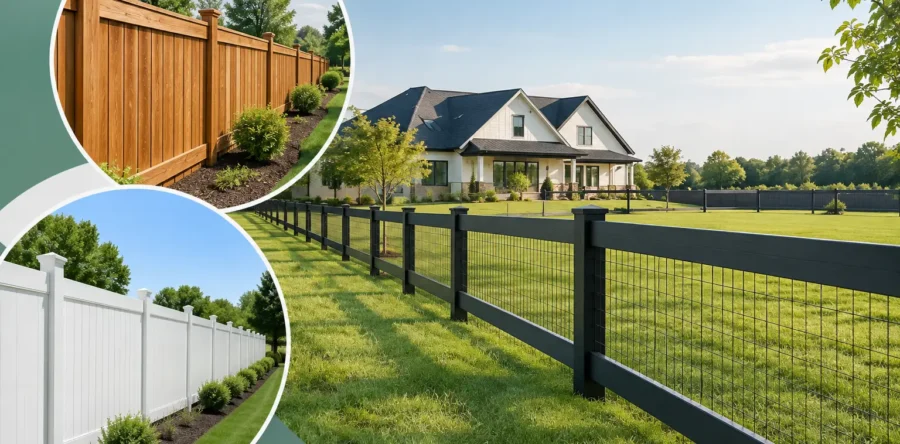
A large perimeter can turn a simple fence project into a major long-term investment. This large property boundary fencing guide is designed for owners who need more than a decorative backyard fence - they need clear boundaries, dependable containment, and materials that will keep doing their job through years of sun, wind, moisture, and daily use.
For ranches, estates, agricultural land, commercial yards, and expansive residential lots, the lowest initial price is rarely the lowest cost over time. A fence line that sags, leans, rusts, splits, or fails at gates creates repeat repair costs and leaves the property exposed. The right system begins with a thoughtful plan, quality structural components, and a contractor who explains what is being installed and why.
Start With the Job Your Fence Must Do
A boundary fence should be selected by function before appearance. Some properties need a visible division between neighboring land. Others need privacy near a residence, safe pet containment, livestock control, security around equipment, or protection from unauthorized vehicle access. One long property line may even require more than one fence style.
For example, a high-visibility front or roadside section may call for a cleaner, more finished design, while a distant rear boundary may be better served by a practical enclosure built for strength and coverage. Matching every section with the same material can make sense, but it is not always the most efficient approach.
Think through how the property is used now and how it may be used later. Will landscaping grow against the fence? Will tractors, trailers, or maintenance vehicles need wide access? Are dogs likely to test the enclosure? Is the fence expected to screen a home, secure a work area, or simply mark a long edge of the property? These answers shape the right height, layout, gate locations, and material choice.
Map the Entire Fence Line Before Choosing Materials
Long fence runs expose construction mistakes quickly. A minor grade change, poorly placed corner, or drainage issue can become a visible problem when it repeats across hundreds or thousands of feet. Before installation begins, walk the full line and identify slopes, washout areas, mature trees, irrigation, existing structures, and points where equipment must pass through.
A straight run can be efficient, but property lines and terrain do not always cooperate. On rolling ground, the fence may need to follow the grade closely or use stepped sections, depending on the material and the level of containment required. Gaps under a fence can be an inconvenience on a privacy line and a serious failure where pets or livestock are involved.
Corner locations deserve special attention. Corners, ends, and gate openings carry more force than ordinary line sections. They should be planned as structural points, not treated as an afterthought. The same is true for changes in direction and areas exposed to strong wind.
Do Not Underestimate Gate Planning
A good fence can be made frustrating by undersized or poorly positioned gates. Consider the largest vehicle, trailer, mower, or delivery equipment that may need access. A pedestrian gate may be useful near a residence, while a wider double gate may be necessary for a ranch road, storage area, or service entrance.
Gate posts and hardware must be built for the actual gate weight and frequency of use. Lightweight hardware on a frequently used wide gate often leads to dragging, alignment issues, and premature replacement. Spending more on a properly supported gate system is usually money well spent.
Choose Materials for Exposure, Not Just Appearance
Southern California properties face a mix of hard sun, coastal moisture, wind, dry soil conditions, and seasonal temperature changes. Material selection should account for the site, not simply a photo of a finished fence.
Vinyl fencing is a strong option for owners who want a clean appearance with low routine maintenance. High-grade vinyl can provide privacy, pet safety, and a polished boundary without the ongoing staining or painting associated with some traditional materials. Quality matters here. Thin panels, weak rails, and poorly supported posts can crack, shift, or look tired long before they should.
Chain-link is often a practical choice for large enclosures, work yards, pet areas, and utility-focused perimeter fencing. It provides visibility, dependable containment, and cost efficiency over long runs. Privacy fabric or other screening options may be appropriate in selected areas, but they also add wind load and should be planned accordingly.
Wood remains a useful choice where a natural, custom appearance is the priority. However, owners should go into a wood project with clear expectations about maintenance. Exposure, sprinklers, soil contact, and sun all affect its long-term condition. A properly designed wood fence can be attractive and functional, but it needs quality materials and sound structural support.
For many large properties, a combination approach is the practical answer: a finished privacy fence where people live and gather, with durable perimeter enclosure farther out. This can protect the budget without sacrificing the parts of the property that need the most visual impact.
The Posts Determine How Long the Fence Stays Straight
Panels get attention because they are visible. Posts determine whether the fence stays standing straight after years of pressure and weather. Weak posts, shallow installation, inconsistent spacing, and poor alignment are common contractor shortcuts that can turn a new fence into a repair project.
For vinyl and privacy fencing, Postmaster metal posts offer a major structural advantage. They are engineered to resist the rot, warping, and many of the failures associated with ordinary wood posts. They also provide the strength needed to support long runs and handle wind pressure without placing the entire burden on the fence panels.
That does not mean every project requires the same post system. The right choice depends on fence height, material, soil conditions, wind exposure, and the intended use of the enclosure. What matters is that the contractor can explain the post plan in plain language and specify what is included in writing.
Budget for the Full System, Not Just Linear Footage
Large-property fencing is commonly priced by linear footage, but the final investment is shaped by more than the length of the line. Grade changes, brush clearing, difficult access, corner assemblies, heavy-duty posts, gates, demolition, and custom transitions all affect the scope.
A vague estimate can hide these details until work is underway. Ask for a written proposal that identifies the fence material, height, post type, gate dimensions, hardware, removal work, and any site conditions that could change the price. Transparent details protect the owner and help prevent disputes later.
Be cautious when one bid is dramatically lower than the others. It may reflect a legitimate difference in material or layout, but it can also mean thinner products, fewer structural components, rushed installation, or missing scope items. A lower number only has value if the finished fence can perform as expected.
Protect Your Property From Poor Contractor Practices
Long fence projects require trust because much of the work happens across areas the owner may not inspect every day. Choose a licensed, bonded, and insured fencing contractor, and verify that the business is equipped for the scale and type of project you need.
Communication matters just as much as materials. You should know who is managing the work, how access will be handled, where materials will be staged, and how the site will be kept orderly. A professional crew does not need to leave a large property looking like a construction dump to build a durable fence.
It is also reasonable to ask direct questions. What posts will be used? How will slopes be handled? What hardware is included? How will the contractor protect existing landscaping and utilities near the work area? A good contractor welcomes those questions because informed customers make better decisions.
Build for the Next Ten Years, Not the Next Season
The best large-property fence is not necessarily the tallest, most expensive, or most decorative option. It is the one that fits the land, performs the needed job, and holds up without creating a constant maintenance burden. A properly planned boundary fence also improves daily life: pets stay where they belong, access points are controlled, equipment areas are defined, and the property feels finished.
All Season Fencing helps Southern California property owners plan durable perimeter systems with clear proposals, quality materials, and direct accountability from a veteran-owned local contractor. Whether the project calls for high-grade vinyl, chain-link, a custom build, or a combination of fence types, the first step is a site-specific conversation.
A fence line this important deserves more than a quick quote. Ask questions, compare the structural details, and choose a plan that protects the property long after installation day.