
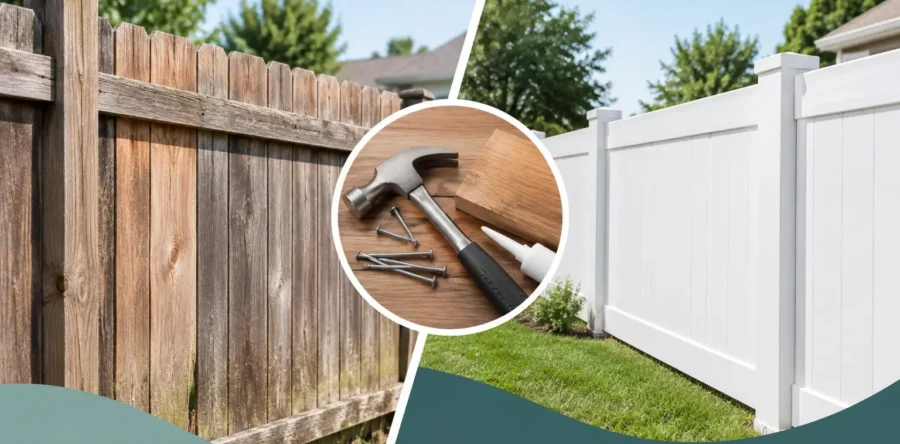
A fence rarely fails all at once. One leaning section becomes two, a gate starts dragging, and a few loose boards turn into a privacy or pet-safety problem. So, can old fences be repaired? Often, yes - but a repair is only worthwhile when the structure beneath the visible damage is still sound.
The right answer depends less on the fence's age than on its posts, rails, fasteners, material condition, and the cause of the damage. A professional inspection should separate a localized problem from a fence that has reached the end of its working life. That distinction protects you from spending good money on a cosmetic fix that will fail again next season.
Can Old Fences Be Repaired Without Replacing Everything?
A targeted repair can be an excellent value when damage is limited to a small area and the remaining fence is stable. Replacing a broken rail, rebuilding one gate, resetting a single failed post, or installing new panels along one side of a property can restore performance without disturbing a fence that is otherwise in good shape.
Repairs are especially practical after a vehicle bump, falling branch, isolated wind damage, or an aging gate that has put stress on only one section. Chain-link fencing can often be tightened or patched. Vinyl fence panels may be replaced when matching components are still available. Wood fencing can receive new boards and rails if rot has not spread into the structural members.
The key is not to judge the fence by its best-looking section. A new panel attached to weak posts or deteriorated rails will not solve the underlying issue. It may simply make the next failure more obvious.
The Fence Posts Usually Decide the Answer
Posts carry the load of the fence. They keep a privacy fence straight against wind, support gates, and prevent panels from shifting over time. When several posts are loose, leaning, cracked, rusted through, or rotted at ground level, spot repairs become harder to justify.
For wood fences, the area where the post enters the ground deserves close attention. Moisture, soil contact, irrigation overspray, and insects can weaken a post from the bottom up while the portion above ground still looks acceptable. Pushing on the fence may reveal movement that is not visible from a few feet away.
Metal posts can also fail, particularly where corrosion has reduced the wall thickness or where an impact has bent the post. On chain-link fences, a sagging top rail or loose terminal post can allow an entire run to lose tension. On vinyl privacy fences, poorly supported posts can cause panels to rack, bow, or separate.
When a fence needs several new posts across multiple runs, replacement often becomes the more dependable long-term choice. At that point, the homeowner is paying for repeated labor around old materials that may soon require additional work.
Why a Straight Fence Can Still Be Structurally Weak
Appearance matters, but it is not the whole inspection. Some old fences remain upright because neighboring sections are holding one another in place. Once one weak post fails, the load transfers to the next post and starts a chain reaction.
A contractor should check post alignment, rail connections, hardware, panel movement, and soil conditions rather than relying on a quick visual estimate. This is particularly important for fences that provide privacy, secure dogs, separate livestock areas, or enclose a business yard. A fence that looks serviceable but cannot withstand ordinary use is not truly repaired.
When Fence Repair Makes Good Financial Sense
Repair generally makes sense when the problem has a clear, contained cause. A well-built fence with one damaged section does not need to be discarded simply because it is no longer brand-new.
A repair is often a sound decision when:
- The majority of posts are plumb, firm, and free of serious deterioration.
- Damage is limited to a small number of boards, panels, rails, or hardware pieces.
- The fence material and color can be matched closely enough for the repair to look intentional.
- The gate problem comes from worn hinges, latches, or alignment rather than failed gate posts.
- The repair cost is substantially lower than replacing a large portion of the fence.
Matching materials deserves more attention than many property owners expect. An older vinyl fence may have faded from years of sun exposure, and replacement sections may look brighter at first. A repaired wood section can also stand out until it weathers. That does not make repair wrong, but it is a trade-off worth discussing before work begins.
Signs Replacement Is the More Honest Recommendation
There is a point where repeated repairs cost more than a planned replacement while delivering less reliability. An honest contractor should explain that point clearly, even when the news is not what a homeowner hoped to hear.
Replacement may be the better option when deterioration is widespread, when multiple posts have failed, or when the fence no longer meets the purpose of the property. A low, aging fence may not provide adequate privacy. A damaged enclosure may no longer safely contain pets. A ranch or estate perimeter with repeated weak areas can create ongoing maintenance demands and security concerns.
Watch for recurring symptoms: sections that lean again after being reset, boards that continue to split or pull loose, widespread rot, rust across several metal components, and gates that will not stay aligned because their supporting posts are moving. If repairs would involve piecing together numerous old and new materials, the finished fence can become uneven in strength and appearance.
Replacement also offers an opportunity to correct construction shortcuts that may have caused the problem. Undersized posts, weak connections, low-grade materials, and inadequate structural support tend to reveal themselves over time. Covering those issues with new surface boards does not improve the framework.
Material-Specific Repair Considerations
Each fencing material fails differently, which is why one-size-fits-all repair advice can lead to poor decisions.
Wood fencing is repairable when deterioration is isolated. Individual boards, rails, caps, and pickets can be replaced, and a skilled contractor can rebuild a damaged portion to blend with the existing layout. However, wood that has decayed through the rails or posts is a structural concern, not a simple board replacement.
Vinyl fencing is valued for its clean appearance and lower maintenance requirements, but impact damage and unsupported posts can still create problems. Cracked panels, damaged rails, and broken brackets may be replaceable. The practical question is whether the original profile, color, and components remain available. Quality vinyl systems installed with proper structural support are far easier to service than thin, low-grade products that crack or warp under stress.
Chain-link fencing is often highly repairable. Bent rails, damaged fabric, loose ties, and gate hardware can frequently be repaired without replacing an entire line. Severe corrosion at posts and fittings, however, can compromise the system from the ground up.
For privacy fencing and exposed locations, post selection has a major effect on long-term performance. Steel Postmaster posts offer a strong alternative to traditional wood posts and are designed to resist the rot and warping that can shorten the life of an otherwise attractive fence. They can be concealed within many privacy-fence designs, preserving a finished appearance while providing a stronger backbone.
Do Not Let a Quick Patch Create a Bigger Problem
The lowest initial price is not always the lowest cost. A contractor who offers to nail up loose boards without checking the posts may provide a fast answer, but not a lasting repair. The same applies to installing new panels on compromised framing or forcing a sagging gate back into position without correcting its support.
Ask what caused the damage, which components will be replaced, and how the repair ties into the existing fence. You should receive a clear written scope of work and straightforward pricing. For larger work, verify that the contractor is properly licensed, bonded, and insured. These steps are not paperwork for its own sake. They help protect the property owner from unfinished work, poor installation practices, and vague promises about material quality.
A clean job site matters, too. Fence repair often involves removing damaged materials, digging around posts, and working near landscaping, pets, driveways, or neighboring property. Professional crews plan the work so the repair improves the property without creating unnecessary disruption.
Get a Repair Recommendation Based on Condition, Not Guesswork
A practical fence evaluation starts with the purpose of the fence. Is it primarily for curb appeal, backyard privacy, dog containment, security, or a large property boundary? The answer affects how much structural strength is required and whether a temporary-looking repair is acceptable.
All Season Fencing helps property owners make that call with direct, condition-based recommendations. A repair may be the right solution. If replacement is the wiser investment, you deserve to know why, what materials are being proposed, and how the new fence will avoid the weaknesses of the old one.
Before another loose board becomes a leaning fence line, have the structure inspected and ask for a clear proposal. The best repair is one that restores confidence every time you close the gate, let the dog outside, or look across your property.