
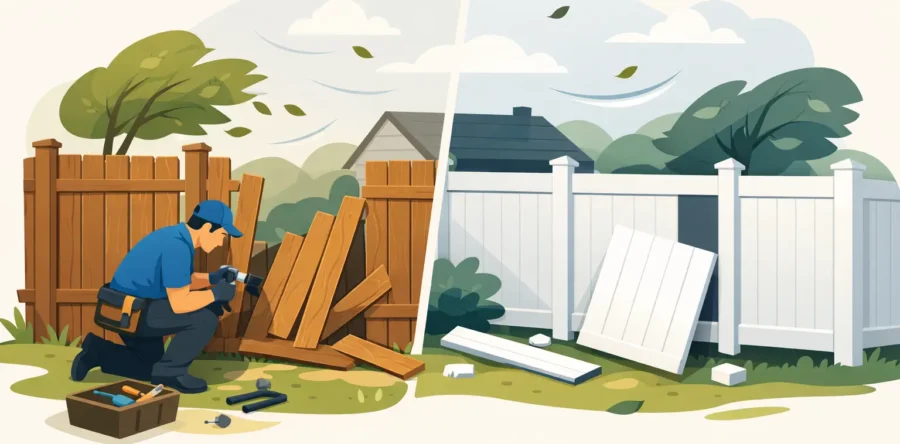
A hard Santa Ana wind can turn a solid-looking fence into a leaning line of loose panels, cracked rails, and pulled posts overnight. Fence repair after wind damage is not just a cosmetic cleanup job. The visible break is often the result of a deeper structural failure below grade, at a connection point, or along a section that was already weakened by age, moisture, or poor installation.
The right repair protects privacy, pets, property lines, and curb appeal. The wrong one may look acceptable for a few weeks, then shift again when the next gust hits. Before buying replacement boards or calling the first available handyman, take a measured look at what failed and why.
Start With Safety and a Clear Damage Check
Keep people and pets away from a leaning or collapsed fence until it has been stabilized. A fence that appears to be resting in place can move suddenly, especially if wind pressure continues or saturated soil is allowing posts to shift. If the damage is near electrical equipment or any overhead lines, do not attempt a repair yourself. Contact the appropriate utility provider and a qualified fencing contractor.
Walk the full fence line from both sides if possible. Wind damage rarely stops exactly where the fence first appears broken. A section that remains standing may have loose fasteners, stress cracks, bowed rails, or posts that have begun to rotate in their footings.
Look for these four conditions during the inspection:
- Posts that lean, twist, lift from the soil, or move when pushed by hand.
- Rails that are split, detached, sagging, or pulling away from posts.
- Panels, pickets, or vinyl components that are cracked, bowed, missing, or no longer properly supported.
- Loose hardware, exposed sharp edges, and neighboring sections that have been pulled out of alignment.
Take photos before moving debris or removing damaged materials. Clear photos are useful for insurance documentation and help a contractor identify whether the issue is limited to one run or affects the fence system more broadly.
Why Wind Damage Often Starts at the Posts
Wind does not only push against a fence. It creates repeated pressure across the entire surface, especially on a tall privacy fence. That force transfers through the panels and rails into the posts, then into the concrete and surrounding soil. If the post is undersized, too shallow, improperly set, or weakened by rot, the fence has little chance of staying straight under heavy loads.
This is why simply reattaching fallen boards may not be a real repair. If a wood post has rotted at ground level or a concrete footing has cracked and loosened, the structure beneath the boards is already compromised. Reusing it can turn a short repair into a repeat expense.
Soil conditions also matter throughout Ventura County and surrounding Southern California communities. Dry ground can loosen around aging posts, while heavy rain can soften soil and expose weak installation practices. A fence that survived years of calm weather may fail when wet soil and strong wind arrive together.
For privacy fencing, stronger post systems can make a major difference. Steel Postmaster posts, for example, provide a durable structural backbone behind wood fencing while preserving the finished appearance homeowners want. They do not rot like traditional wood posts and are designed to resist the twisting and bending forces that commonly damage fence lines in high winds.
Fence Repair After Wind Damage: Repair or Replace?
The practical question is not whether every damaged piece can be patched. It is whether the repaired section will perform reliably and match the rest of the fence. The answer depends on the material, age, extent of damage, and the condition of the posts.
A targeted repair can make sense when damage is isolated. For example, a few broken redwood boards or one damaged rail may be replaced if the surrounding posts are plumb, firmly set, and free of decay. A chain-link section can often be restored when the framework remains straight and the damage is limited to fabric or fittings.
Replacement is generally the smarter long-term choice when multiple posts are leaning, rails are extensively split, or the fence has reached the end of its service life. Replacing only the visibly failed section beside an aging fence can also create a mismatch in color and condition. That may be acceptable for a utility area, but it is often not the best result along a front yard, backyard, business perimeter, or estate property.
Vinyl fencing requires its own evaluation. Cracked vinyl panels should not be treated like damaged wood pickets. Improvised patches can be obvious and may not restore the section's integrity. A professional repair should identify whether the post, rail, insert, or panel failed, then use compatible components designed for that fencing system.
Temporary Bracing Has a Place, but It Is Not the Finish Line
If a fence is leaning but has not collapsed, temporary bracing may prevent further movement while you arrange a professional inspection. Bracing is useful for reducing risk, but it should not be mistaken for a permanent correction. Pulling a post upright without addressing a failed footing, rot, or inadequate depth simply hides the problem.
Avoid screwing random scrap lumber into compromised posts or tying damaged sections to nearby trees, structures, or utility equipment. Those quick fixes can transfer pressure where it does not belong and create additional repair work. If the fence is down, move loose materials away from walkways and secure the area until the damaged section can be removed or rebuilt safely.
Material Choices Should Match the Property and the Wind Load
There is no single best fence material for every wind-damaged property. A ranch enclosure, a small business perimeter, and a backyard privacy fence have different performance needs. The key is selecting a design and support system that fits the exposure, terrain, intended use, and maintenance expectations.
Redwood and cedar remain strong choices for homeowners who want a warm, natural appearance and custom design flexibility. Quality lumber, properly fastened rails, and durable metal posts can significantly improve long-term performance. Lower-grade wood and untreated structural components may reduce the initial price, but they often create the same rot, warping, and failure issues that lead to repairs after storms.
Vinyl is a signature option for property owners seeking a clean look with minimal maintenance. It will not rot, and quality systems resist many of the issues common to aging wood fences. Still, vinyl needs correct spacing, reinforced posts where required, and professional installation. The panel alone is only as dependable as the structure holding it in place.
Chain-link can be a practical option for pet containment, commercial boundaries, and large properties because it allows wind to pass through more freely than a solid privacy surface. For exposed areas, that reduced wind resistance can be a real advantage. It may not provide the visual screening of wood or vinyl, so the best choice comes down to priorities rather than a one-size-fits-all recommendation.
Do Not Let a Storm Create a Contractor Problem
Wind events bring out rushed repair offers, and property owners should be careful with anyone who pressures them to make an immediate cash decision. Ask whether the contractor is properly licensed, bonded, and insured for fencing work. Request a clear written scope that identifies which posts, rails, panels, footings, and materials will be replaced.
A legitimate proposal should explain the structural approach, not merely promise to make the fence look straight again. It should also distinguish between temporary stabilization, repair, and full replacement. Be cautious of vague language, unusually low pricing without material details, or large upfront payment demands that do not follow California contractor requirements.
At All Season Fencing, the focus is on identifying the actual cause of failure and recommending a solution that fits the property, whether that means a focused repair or a rebuilt fence line with high-grade materials and stronger post construction. A clean job site, direct communication, and a detailed proposal are part of protecting the customer, not extras.
Act Before the Next Wind Event
Once the immediate repair is complete, keep an eye on the fence after rain and during seasonal winds. Check for shifting posts, loose boards, cracks, and areas where soil has settled around the footings. Small corrections made early are usually far less disruptive than rebuilding an entire collapsed run.
If your fence has been damaged, a professional inspection can provide a clear answer before a temporary patch becomes another storm-season failure. Contact Seth for a fast, friendly, free proposal built around the condition of your fence and the demands of your property.