
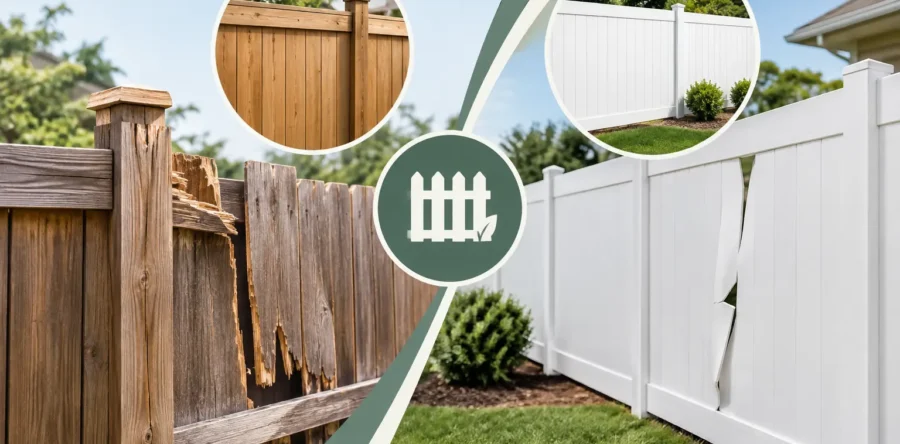
A fence panel can look like a small problem until a dog finds the gap, a neighbor loses privacy, or a Santa Ana wind turns one loose board into a section on the ground. Knowing when to replace damaged fence panels helps you make a sound decision before a localized repair becomes a larger structural expense.
The right answer depends on what failed, why it failed, and whether the surrounding fence is still doing its job. A cracked board is not the same as a leaning fence line. Honest fence repair starts with finding the cause, not simply fastening a new panel over an old problem.
Repair or replace? Start with the source of damage
A panel is the visible part of a fence, but it relies on rails, posts, fasteners, and the ground beneath it. If the damage came from a fallen branch, an impact, or one isolated area of rot, replacing the affected panel may be all that is needed. When the posts remain plumb and solid, a targeted repair can restore privacy, security, and curb appeal without rebuilding an entire run.
Replacement becomes the better value when damage is repeated, widespread, or tied to failing support components. A panel that keeps pulling away from the rails, for example, may not be the real issue. The post could be moving, the rails may be decayed, or undersized fasteners may have loosened over time.
Look beyond the obvious broken picket. Check the fence from both sides, open and close any nearby gate, and sight down the line to see whether it remains straight. Those quick checks often reveal whether you have a panel-level problem or a fence system nearing the end of its service life.
Signs it is time to replace damaged fence panels
Some damage is cosmetic. Other damage compromises containment, privacy, and safety. Replacement is usually the practical choice when a panel has one or more of the following conditions:
- Multiple broken, split, or missing boards that leave openings large enough for pets, children, or unwanted access.
- Soft, crumbling, or extensively rotted wood, especially around fasteners and lower edges where material strength has been lost.
- Warping or bowing severe enough that boards no longer align, attach securely, or provide consistent privacy.
- Loose rails, repeated fastener failures, or panels separating from posts after prior repairs.
- Damage across several adjacent sections, making individual patchwork repairs more costly and less attractive than a coordinated replacement.
A small crack can often be addressed before it spreads. But once wood fibers are breaking down across a panel, replacement is typically more dependable than adding another brace or screw. Patchwork repairs may temporarily hold things together, yet they can create an uneven appearance and transfer stress to the next weak connection.
For vinyl fencing, inspect for cracks, impact breaks, brittle sections, and panels that have shifted out of their routed connections. Vinyl does not rot, but it can be damaged by hard impacts, extreme force, or installation issues. A single damaged vinyl section can often be replaced cleanly if the posts and adjoining components are properly aligned.
Post condition changes the entire decision
Posts are where many fence repairs succeed or fail. A new panel attached to a leaning, loose, or deteriorated post will not stay straight for long. It may look acceptable on installation day, then begin to rack, sag, or pull loose as wind and normal use put pressure back on the system.
Test posts carefully. They should not rock in the ground, lean noticeably, or show advanced deterioration at the base. If several posts are compromised, replacing panels alone is false economy. The better approach is to correct the structural support and then install new panels designed to work with it.
For long-term replacements, the post material deserves as much attention as the panel style. High-grade steel Postmaster posts provide a strong alternative to conventional wood posts and are designed to resist the warping, rot, and post failure that commonly shortens a wood fence's life. They can also be concealed within many wood fence designs, preserving the finished appearance while strengthening the structure behind it.
This matters in exposed areas of Ventura County and throughout Southern California, where sun, coastal air, wind, and seasonal weather can expose weak materials and marginal installation practices quickly. Good fencing is not just about a clean-looking face. It is about what remains stable behind the face years later.
When a repair is still the smart choice
Not every damaged panel calls for replacement. A repair may make sense when the damage is isolated and the rest of the fence is structurally sound. Refastening a loose board, replacing a limited number of pickets, correcting a minor rail issue, or resetting an otherwise healthy panel can extend service life at a reasonable cost.
The key is matching the repair to the condition of the fence. If a property owner wants a short-term solution while planning a future replacement, a practical repair can be appropriate. It should be presented clearly as a short-term measure, not sold as a permanent fix.
Material matching is another consideration. An older wood fence may have weathered to a color that new boards will not match immediately. A repair can still restore function, but the new section may stand out until it ages or receives a compatible finish. With vinyl, color availability and profile matching can affect whether a single panel repair blends properly with the existing fence.
Do not ignore safety, privacy, and containment failures
Replace a damaged fence panel promptly when it no longer protects the people, pets, or property behind it. A leaning section near a pool area, a sharp broken rail along a walkway, or an opening where a pet can escape should not wait for a convenient season.
Commercial properties, ranches, and larger estates have another concern: a damaged section can weaken the integrity of a much larger perimeter. Livestock, equipment areas, storage zones, and access boundaries require reliable fencing, not temporary fixes that become permanent by neglect.
Wind damage also deserves a close inspection after the visible debris is cleared. Even if a panel remains standing, check for pulled fasteners, fractured rails, post movement, and loosened connections. Wind loads can create damage that is not obvious from the street but shows up later as sagging or separation.
Choose replacement materials for the next decade, not the next season
A panel replacement is a chance to correct what caused the original failure. That may mean stronger posts, better-grade lumber, improved fastening methods, or a change to vinyl or chain-link where lower maintenance or greater durability better fits the property.
There are trade-offs. Wood provides a traditional, customizable appearance and can work well for privacy and decorative layouts, but it needs ongoing attention to moisture exposure, finish condition, and natural movement. Vinyl offers a clean, low-maintenance privacy option, though quality of the material, proper reinforcement where needed, and precise installation remain essential. Chain-link can be an efficient solution for pet containment, side yards, commercial boundaries, and large properties where visibility is useful.
The best material is the one that meets the property's real needs: privacy, security, pet safety, appearance, maintenance expectations, and budget. The lowest initial price is rarely the best value if inferior panels, weak posts, or rushed installation lead to another repair in a few years.
Get a clear assessment before work begins
Before approving a repair or replacement, ask for a straightforward explanation of what failed and what the recommended work will correct. A professional proposal should identify whether the scope is limited to panels or includes rails, posts, gates, or related sections. It should also describe the materials being installed rather than relying on vague language such as “standard” or “contractor grade.”
Homeowners should also work with a properly licensed, bonded, and insured contractor, and verify that the written estimate is specific. California contractors must follow CSLB down-payment rules, which is one more reason to be cautious with anyone demanding an excessive amount before materials or work are in place.
All Season Fencing approaches damaged fencing with that level of directness. The goal is not to push a full replacement when an honest repair will serve the property. It is to prevent customers from paying for a cosmetic fix that leaves the real structural problem untouched.
If a panel is loose, broken, leaning, or no longer containing what it should, take a close look now rather than waiting for the next wind event. A fast, informed assessment can protect your privacy, your pets, and the investment you have already made in your property.