
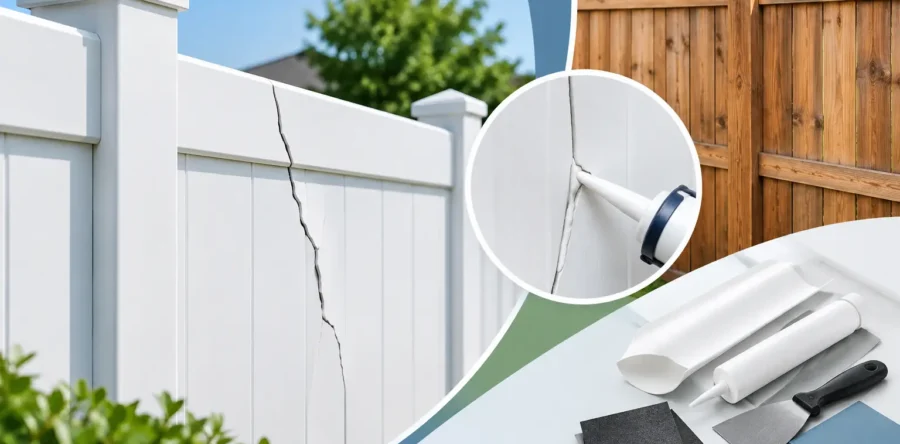
A crack in a vinyl fence rarely starts as a major problem. It may appear as a thin split near a rail opening, a fracture at a gate post, or a broken picket after a hot summer afternoon. But vinyl fence cracking deserves attention early. Small damage can allow a panel to flex incorrectly, place extra stress on nearby parts, and eventually turn a simple repair into a larger section replacement.
For homeowners and property owners, the key question is not simply whether vinyl can crack. It can. The better question is why it cracked, whether the fence structure is still sound, and what repair will prevent the same issue from returning.
Why Vinyl Fence Cracking Happens
Quality vinyl fencing is designed for outdoor exposure, but it is not indestructible. Cracks generally come from a combination of material quality, weather exposure, physical force, and installation details.
Southern California sun is a real consideration. Vinyl expands in heat and contracts when temperatures drop. A properly built fence allows panels and rails to move within the system as temperatures change. If components are installed too tightly, cut incorrectly, or fastened in a way that restricts movement, that normal expansion can concentrate stress at rail ends, picket openings, and post connections.
Impact is another common cause. A lawn tool, vehicle, trash bin, tree limb, or active dog can crack a picket or rail. A single impact crack does not always mean the entire fence is failing. However, if a panel already has poor support or brittle material, even a minor hit can cause more extensive damage than it should.
Low-grade vinyl is often more vulnerable to cracking as it ages. Better vinyl formulations use appropriate UV inhibitors and impact modifiers to help the material tolerate sunlight and everyday movement. Inferior products may look acceptable when first installed, then become chalky, brittle, or discolored after prolonged exposure. A low initial price can become expensive when matching replacement parts are unavailable or multiple sections begin failing.
Posts and Rails Matter More Than They Look
A vinyl fence panel is only as stable as the posts supporting it. Posts that lean, shift, or lack proper internal reinforcement can force rails and pickets out of alignment. That movement puts pressure on the vinyl components until a crack develops at the weakest point.
Gates are especially demanding. A gate concentrates weight and repeated motion on its hinge post. If the post was not built for that load, the hardware can pull out of alignment, the post can move, and surrounding vinyl can split. A cracked gate area should be evaluated as a structural issue, not treated as a cosmetic patch job.
All Season Fencing frequently recommends strong structural components, including Postmaster metal posts where the fence design and property conditions call for them. The goal is not to add unnecessary material. It is to create a fence that stays straight and reduces the movement that contributes to premature component failure.
Is a Cracked Vinyl Fence Repairable?
Sometimes, yes. A clean crack limited to one picket, cap, rail, or small section can often be repaired by replacing the damaged component. This is usually the best approach when the surrounding posts, rails, and panels are straight, secure, and made from a product with available matching parts.
Replacement becomes more likely when cracking is widespread, the fence material has become brittle, or panels have warped and shifted from post movement. Patching several cracks with adhesives may look like a quick fix, but it rarely restores the original strength or clean appearance. Adhesive repairs can also discolor over time, collect dirt, and fail under heat or pressure.
A professional inspection should look beyond the visible break. The condition of the post, rail pockets, fasteners, panel alignment, and adjacent sections matters. If a crack occurred because a rail was bound too tightly or a post is moving, replacing the broken picket alone may only delay the next failure.
When a Component Replacement Makes Sense
Replacing a single component is often practical when the damage came from a clear one-time event, such as a branch strike or accidental impact. The fence should otherwise be in good condition, with no excessive fading, chalking, or brittle areas.
Color matching is worth discussing before work begins. Even white vinyl can weather slightly over time, and tan, gray, and other colors may show a noticeable difference between old and new material. A qualified contractor can help determine whether a replacement piece will blend acceptably or whether replacing a full panel will produce a cleaner result.
When Replacement Is the Better Investment
A full panel or section replacement may be the more honest recommendation when cracks appear in several locations, the rails are distorted, or the vinyl breaks with light pressure. These conditions can indicate material deterioration rather than isolated damage.
Property owners should also consider the age and source of the fence. If the original manufacturer no longer produces the profile, finding a part that actually fits can be difficult. Forcing a near-match into an existing system can create gaps, binding, and new stress points. A repair should fit correctly, operate properly, and preserve the fence's purpose for privacy, pet containment, or perimeter security.
How Proper Installation Prevents Future Cracks
The best defense against vinyl fence cracking begins before the first panel is installed. Material selection, layout, post spacing, rail fit, gate reinforcement, and allowance for thermal movement all influence long-term performance.
A reliable installation uses components designed to work together rather than mixing mismatched parts. Rails should seat properly in their post openings without being forced. Panels should be cut carefully where needed, and posts should be set to maintain straight, consistent lines. On sloped ground, the fence design should account for grade changes instead of placing panels under unnatural stress.
For large properties, ranch fencing, and long residential runs, consistency becomes even more important. One poorly supported post may affect multiple sections. The strongest-looking fence is not necessarily the one with the most material. It is the one engineered and installed so that each component carries its intended load.
Homeowners should be cautious about repairs that promise a permanent result without examining the cause. Filling a crack, adding a random screw, or forcing a loose rail back into place can create a more visible problem later. A professional repair should correct the failure point and protect the surrounding fence.
Simple Care That Helps Vinyl Last Longer
Vinyl does not require staining or painting, but it still benefits from basic attention. Wash off dirt and irrigation residue periodically with mild soap and water. Avoid harsh solvents, abrasive pads, and pressure washing at a setting strong enough to damage surface finish or force water into connections.
Keep sprinklers from repeatedly soaking the same panels and posts, especially if the water leaves mineral deposits. Trim shrubs and vines away from the fence so they do not trap moisture, rub against panels, or hide developing damage. After storms or strong winds, walk the fence line and check for shifted posts, loose caps, damaged rails, and gate movement.
If you notice a new crack, take a photo and avoid putting pressure on that section until it can be assessed. This is particularly wise around gates, corners, and areas that contain pets. A small repair completed at the right time can protect the safety and appearance of the entire enclosure.
A good vinyl fence should provide years of clean, low-maintenance service without becoming a recurring repair project. If your fence is cracking, leaning, or no longer closing correctly, ask for a straightforward evaluation of the materials and structure. The right repair is the one that addresses what failed, explains the options clearly, and leaves you with a fence you can rely on.