
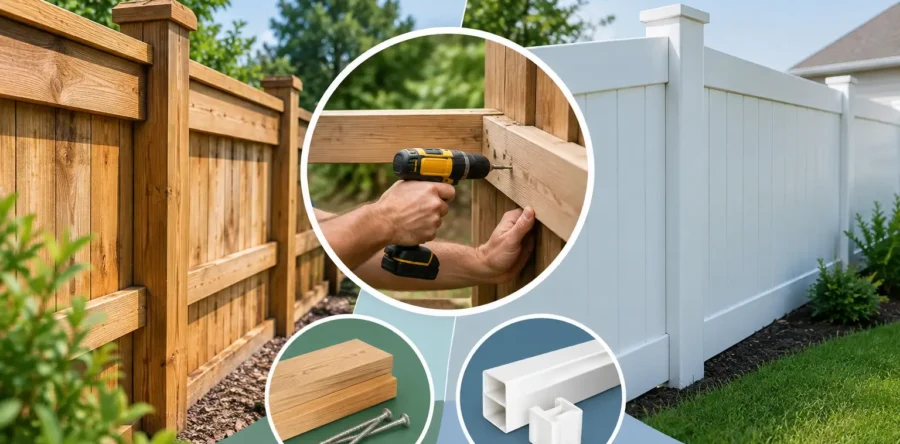
A fence can look like it has a simple broken rail problem when the real issue is a loose post, hidden rot, or a section that was never properly supported. Knowing how to repair fence rails starts with finding the source of the failure before fastening new lumber onto a weak frame. A quick patch may make the fence look better for a few weeks, but a sound repair restores privacy, pet safety, and strength.
For homeowners and property owners, the right approach depends on the fence material, the age of the section, and whether the posts are still solid. Replacing one rail can be a sensible repair. Rebuilding an entire run may be the better value when several components have reached the end of their service life.
Start by Finding Why the Rail Failed
Fence rails are the horizontal members that connect the vertical posts and support the pickets or panels. When a rail cracks, sags, pulls loose, or rots, inspect more than the damaged board. Push gently on each nearby post. A healthy post should not sway at ground level, lean noticeably, or show severe cracking where the rail attaches.
Look closely at the rail ends, especially where they meet a post. Wood commonly fails there because moisture collects in the connection area. Rusted fasteners can also expand, loosen their grip, and split the wood. On older fences, rails may have been attached with nails alone, which can gradually back out under wind movement and the weight of aging pickets.
Check the pickets or boards attached to the rail as well. If they are pulling away, warped enough to put constant pressure on the frame, or rotten along the bottom edge, a new rail alone may not solve the problem. The repair should address what caused the load or moisture damage in the first place.
Decide Whether a Rail Repair Is Worth It
A single-rail replacement usually makes sense when the posts are plumb and secure, the other rails remain firm, and the fence boards are in serviceable condition. This is common after impact damage, an isolated knot failure, or a small area of wood rot.
A partial rebuild is often more practical when two or more rails are deteriorated, multiple pickets are loose, or posts move when pushed. Trying to preserve failing framing can cost more over time because each patch transfers stress to the next weak component.
There is also a material question. On a wood privacy fence, individual rails can often be replaced with matching lumber. Vinyl fencing uses routed rails and purpose-made brackets or post openings, so the repair must follow the manufacturer’s system. Cutting corners with random screws through a vinyl panel can create cracks, void product coverage, and leave the section looking patched. Chain-link rails have their own fittings and should be repaired with compatible galvanized components.
How to Repair Fence Rails on a Wood Fence
For a typical wood fence, begin by removing the boards attached to the damaged rail. Mark their original positions if you plan to reuse them. Take out loose nails or screws carefully, then remove the failed rail. If the rail is badly rotten, wear gloves and eye protection because weakened wood can break apart unexpectedly.
Measure the replacement rail from post to post. Use a straight, sound piece of exterior-rated lumber with dimensions that match the existing fence design. A rail that is undersized may sag under the weight of the pickets, while an oversized rail may not fit the original layout or hardware.
Before installing the new rail, inspect the post connection. If a rail sits in a notch, clean out loose material and confirm that the notch is still structurally sound. If the fence uses metal rail brackets, replace bent, corroded, or loose brackets rather than attaching a new rail to worn hardware.
Set the rail level and fasten it with exterior-rated structural screws or approved fence fasteners. Screws generally provide a stronger, more serviceable connection than basic nails, particularly in areas exposed to wind. Pre-drilling near the ends of the rail can reduce splitting. Use enough fasteners to secure the connection, but do not overdrive them and crush the wood fibers.
Reattach the pickets with consistent spacing and check their top line as you go. A rail can be level while the pickets still look uneven because older boards may have shifted or warped. Small adjustments at this stage create a cleaner finished appearance.
Reinforcing a Sound but Sagging Rail
If the rail is solid but sagging in the middle, a reinforcement may be possible. This can involve adding a matching support rail, installing a properly sized brace, or replacing the rail before it breaks completely. The method depends on the fence layout and where the load is coming from.
Avoid simply screwing a short scrap of lumber over a cracked area. That type of patch rarely addresses the full span of the rail, holds moisture against the wood, and can make future repairs harder. A full-length replacement is usually the cleaner and more durable option.
Repairing Vinyl Fence Rails Correctly
Vinyl rails do not rot, but they can crack from impact, become loose after a post shifts, or fail where an improper screw was installed. Their internal design matters. Many vinyl fence systems use rails that slide through routed holes in the posts, sometimes with aluminum inserts for added strength.
Start by determining whether the damaged rail can be removed without disassembling the entire section. Depending on the style, you may need to remove caps, panels, or pickets to release it. Do not force a brittle or cracked rail out of place, especially during colder weather when vinyl is less flexible.
Replace the rail with a compatible component intended for that fence system. Confirm that any required aluminum reinforcement is installed in the correct location. If a vinyl post is leaning or moving, correct the post problem before installing a new rail. A straight new rail will not stay straight when connected to an unstable post.
Vinyl fencing is often chosen for its low-maintenance finish, but its structural performance still depends on proper installation. Quality rails, correctly supported posts, and manufacturer-compatible components matter far more than a cosmetic patch.
Do Not Ignore the Posts
Fence rails fail early when posts are weak. A loose, leaning, cracked, or rotted post puts repeated stress on every rail connection. If you replace rails without dealing with a failing post, the repair may pull loose during the next period of strong wind.
Wood posts should be checked around ground level, where decay can remain hidden until the post loses strength. Metal posts should be inspected for rust, bends, and loose connections. For new or rebuilt wood fencing, steel Postmaster posts are a strong long-term option because they resist the rot and warping issues that can affect conventional wood posts. They can also be concealed within the fence design for a clean wood-fence appearance.
On large properties, ranch fencing, and high-exposure perimeter runs, post quality becomes even more important. A long fence line can amplify wind pressure, and one failed post may start a chain of loose rails and misaligned sections.
Common Repair Mistakes That Shorten Fence Life
The most expensive fence repairs often begin as inexpensive shortcuts. Attaching a new rail to a deteriorated post, reusing corroded hardware, or installing untreated interior lumber outdoors can turn one repair into a repeat problem.
Be cautious about covering damage rather than removing it. Wood rot spreads through moisture exposure, not because it is visible from one side. Leaving decayed rail ends inside brackets or post notches can trap damp material against the new rail. Clean the connection area and replace compromised hardware before reassembly.
It also helps to consider the fence’s job. A decorative side-yard fence may tolerate a limited repair, while a privacy barrier, pool-area boundary, pet enclosure, or commercial perimeter needs dependable structural connections. The stakes are different when the fence helps keep children, pets, equipment, or livestock safely contained.
When Professional Fence Repair Makes More Sense
A qualified fencing contractor can evaluate whether the problem is isolated or part of a larger structural failure. This is especially useful when posts are leaning, a fence line has shifted, vinyl components need matching parts, or several sections have deteriorated at once.
Before hiring anyone, ask for a written scope that identifies what will be replaced, what materials will be used, and whether damaged posts or hardware are included. Verify license, bond, and insurance information. These basic steps help protect property owners from vague repair promises and low-grade materials that will not last.
All Season Fencing provides direct, professional evaluations for fence repairs and replacements throughout Ventura County and surrounding Southern California communities. A clear assessment can prevent a small rail issue from becoming a larger fence failure.
A properly repaired rail should feel like part of the original fence, not like a temporary brace waiting for the next windy day. Fix the underlying cause, use materials suited to outdoor exposure, and choose a repair that protects the property for years rather than a season.