
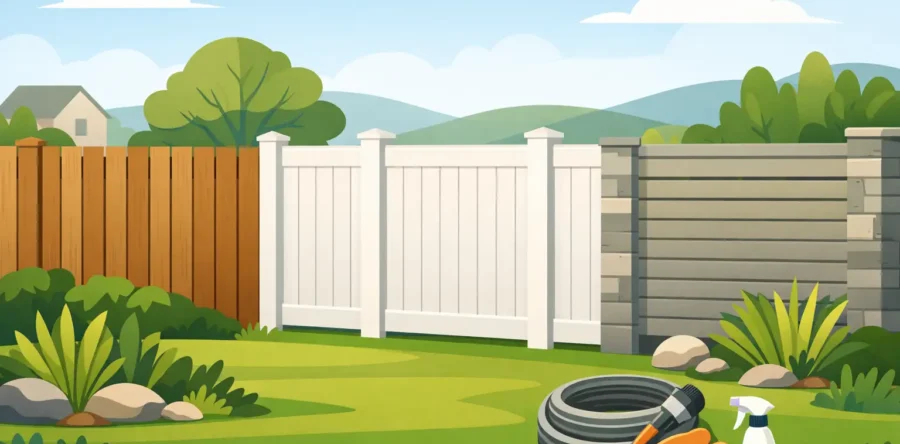
A fence should not become another weekend project that demands sanding, painting, replacing boards, and chasing down loose fasteners. For homeowners and property owners comparing the top low maintenance fence materials, the right choice comes down to more than appearance. It needs to suit the property, the exposure, the desired privacy level, and the strength of the installation beneath it.
In Ventura County and nearby coastal and inland communities, fences deal with intense sun, dry conditions, marine air, wind, and occasional hard rain. A material that looks good on day one but warps, fades, rusts, or loosens prematurely is not a value. Here is a practical look at the options that require the least ongoing work, along with the trade-offs that should guide a professional decision.
Top Low Maintenance Fence Materials Compared
Vinyl, metal-supported fencing, chain-link, and properly selected wood all have a place. There is no single best material for every yard, ranch, commercial site, or estate perimeter. The best low-maintenance fence is the one built with quality components and matched to the conditions it will face.
Vinyl fencing: the leading choice for privacy with less upkeep
High-quality vinyl is often the first choice for homeowners who want a clean privacy fence without regular painting or staining. It does not rot, attract termites, or absorb moisture the way wood can. Most routine care consists of an occasional rinse with a hose and mild soap if dust, irrigation residue, or surface marks appear.
Vinyl is especially practical for families who want a polished boundary around a backyard or pool area, as well as owners replacing older wood fencing that has reached the end of its service life. It offers consistent color and a tidy finished appearance without asking the owner to refinish it every few years.
The important distinction is quality. Thin, bargain-grade vinyl panels can feel flexible, discolor over time, and perform poorly in wind. A professional installation should use high-grade vinyl and a structural support system designed to keep long runs straight and secure. All Season Fencing specializes in high-quality vinyl installation because the material delivers excellent long-term value when it is properly specified and installed.
Vinyl is not indestructible. A severe impact can crack it, and repairs may require replacing a section rather than patching it. It is also not the right fit for every architectural style. Still, for straightforward privacy and minimal annual maintenance, it is hard to beat.
Postmaster metal posts: the structural upgrade that matters
Fence maintenance is not only about what people see. Many fence failures start underground or at the posts, not at the panels. Wood posts can eventually decay at the soil line, shift, or split under prolonged stress. Once that happens, even good-looking fence boards can lean and loosen.
Postmaster metal posts address that weak point. These steel posts are engineered to sit within the fence line rather than interrupt its finished appearance, while providing substantially greater strength than conventional wood posts. They resist rot and offer dependable support in wind-prone areas, on long privacy runs, and where a fence needs to stay aligned for the long haul.
For a homeowner, this can mean fewer post replacements and less worry about a fence that starts leaning years after installation. For a commercial or large-property owner, it means the perimeter is built on a stronger foundation. The visible material may be vinyl or wood, but the post system often determines how much maintenance the fence will require later.
Chain-link fencing: practical, durable, and easy to maintain
Chain-link is one of the most durable choices for functional boundaries, pet containment, commercial areas, and large properties. It is not generally selected for full visual privacy, but it earns its reputation through strength, affordability, and straightforward care.
Galvanized chain-link resists corrosion, while vinyl-coated options add color and another layer of protection. Routine maintenance is minimal: inspect the line occasionally for impact damage, loose tension components, or vegetation growing into the mesh. With proper installation and quality terminal posts, a chain-link system can provide many years of service with very little attention.
This material is a strong fit when the priority is securing a large area without the higher cost of a solid privacy fence. Ranch, farm, and commercial clients often value chain-link because it handles daily use well and remains easy to repair if a localized section is damaged. In coastal settings, coating quality and proper material selection are particularly important to help manage salt-air exposure.
Redwood and cedar: lower maintenance wood, not maintenance-free wood
Wood remains the preferred material for many property owners who want natural warmth, custom detailing, or a fence that complements an established landscape. Redwood and cedar are naturally more resistant to decay and insects than many common lumber options, making them smarter choices for a wood fence intended to last.
That said, wood is not maintenance-free. Sun exposure can gray the surface, moisture cycles can cause checking, and finishes eventually need renewal. A wood fence can stay attractive for years when built with quality lumber, sound construction practices, and a realistic maintenance plan. It just asks more of the owner than vinyl or chain-link.
The benefit is flexibility. Wood can be customized for unusual grades, distinctive property lines, and designs that do not look mass-produced. If a board is damaged, individual components can often be replaced without rebuilding an entire section. For owners who appreciate natural materials and are willing to clean, seal, or stain on a schedule, redwood or cedar can be a worthwhile balance of character and durability.
What Makes a Fence Truly Low Maintenance?
Material gets the attention, but craftsmanship determines whether a low-maintenance fence stays that way. A fence set with poor post depth, undersized posts, inferior fasteners, or rushed alignment can become a maintenance problem regardless of whether the panels are vinyl, wood, or chain-link.
Start with the soil, grade, and exposure. A windy hillside, a coastal lot, and a flat inland backyard may require different post spacing, depth, reinforcement, and material choices. Drainage matters as well. Constant irrigation against a fence base shortens the life of wood and can create staining or soil movement around any post system.
Quality hardware also pays off. Corrosion-resistant fasteners, properly tensioned components, and clean connections reduce the loose parts and callbacks that owners often associate with aging fences. The goal is not simply to install a boundary that looks straight on completion day. The goal is to build one that remains straight and functional after years of weather and use.
Choosing by Property Type and Priorities
For a typical backyard where privacy and a clean appearance are the priorities, high-grade vinyl with metal post reinforcement is often the lowest-maintenance investment. It eliminates many of the common problems associated with aging wood while keeping the finished line attractive.
For a large acreage, equipment area, pet run, or business perimeter, chain-link may deliver the best maintenance-to-cost ratio. It is strong, practical, and easier to scale across long distances. Where appearance and custom design matter most, redwood or cedar supported by Postmaster metal posts can preserve the natural look of wood while reducing the chance of post-related failure.
Budget should be considered over the full service life, not just the first invoice. A lower initial price can become expensive if the installation uses weak components that require repeated repairs. Ask what grade of material is being installed, what post system is proposed, how the contractor handles slopes and wind exposure, and what maintenance the material will realistically require.
A Better Fence Starts With an Honest Proposal
The right material should solve the problem you actually have, whether that is privacy, pet safety, a damaged perimeter, visual appeal, or dependable containment across a larger property. A licensed, bonded, and insured contractor should explain the options clearly instead of pushing the same material on every customer.
For property owners in Ventura, Oxnard, Camarillo, Santa Barbara, Malibu, and surrounding Southern California communities, a site-specific proposal can prevent expensive shortcuts before work begins. Contact Seth at All Season Fencing for a fast, friendly, no-pressure professional estimate and straightforward advice on a fence built to require less attention after the crew leaves.