
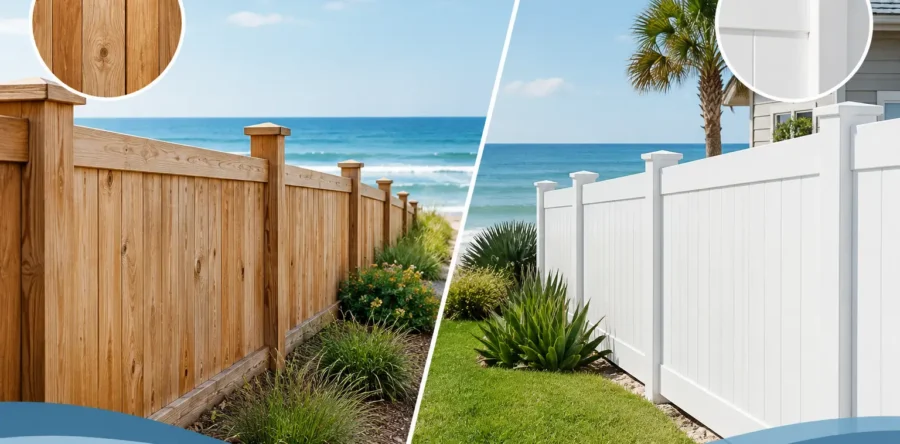
A fence can look perfectly sound when it is installed, then begin showing corrosion, staining, loose hardware, or failing gates far sooner than expected near the ocean. When homeowners ask, “what fencing survives salt air?” the honest answer is that the material matters, but so do the posts, fasteners, gate hardware, and installation details that hold the entire system together.
Salt air is not limited to homes directly on the beach. Wind carries salt inland, and coastal fog leaves a fine residue on fence surfaces and metal components. In Port Hueneme, Oxnard, Ventura, Malibu, Santa Barbara, and other coastal Southern California communities, choosing a fence based on appearance alone can lead to expensive repairs. The best fence for salt exposure is one built with materials that do not absorb moisture, rust easily, or depend on thin coatings to stay protected.
What Fencing Survives Salt Air Best?
For most residential coastal properties, high-quality vinyl fencing is usually the strongest choice for privacy, pet containment, and low-maintenance curb appeal. It does not rot, does not rust, and will not absorb saltwater the way natural wood can. A properly built vinyl fence can handle the daily combination of moisture, sun, wind, and salt residue without requiring regular painting or sealing.
That does not mean every vinyl fence performs the same. Thin, low-grade panels can become brittle, fade prematurely, or flex too much in wind. The better choice is a fence system made with high-grade vinyl, substantial rails, properly routed components, and posts designed for the actual height and exposure of the fence. In windy coastal locations, structural reinforcement is not an upgrade to overlook.
Vinyl is especially practical when privacy is the priority. A solid privacy fence blocks views, helps define a backyard, and provides dependable boundaries for children and pets. Routine care is simple: rinse away salt residue periodically and clean isolated surface grime with a mild, manufacturer-approved cleaner.
The post system matters as much as the panels
A fence does not fail only because a panel cracks or a picket fades. Many failures begin below the top rail, where undersized posts lean, wood supports decay, or metal components corrode. A straight fence line and a gate that closes properly years later depend on the framework.
For vinyl installations that need added strength, Postmaster metal posts are a smart structural option. They are concealed within the fence line, so homeowners can keep the clean appearance of vinyl while gaining a steel post system designed to resist shifting and wind pressure. Quality galvanized steel provides far better long-term support than relying on weak inserts or undersized posts.
In areas with frequent salt spray, the details still matter. Posts should be correctly set, rails should fit without forcing or excess gaps, and the fence should be designed around the property’s wind exposure. A tall privacy fence facing open coastal wind needs more planning than a short side-yard enclosure protected by the house.
Aluminum Works Well for Open Coastal Boundaries
Aluminum fencing is another excellent option for salt-air environments. Unlike ordinary steel, aluminum does not rust. Quality powder-coated aluminum fencing is well suited to pool surrounds, front-yard boundaries, view fencing, garden enclosures, and properties where an open, refined look is preferred over full privacy.
Its main trade-off is simple: aluminum does not create visual screening on its own. If the goal is to block a neighbor’s view or contain a small dog that could fit through the pickets, a different design may be a better fit. Aluminum also needs properly rated hardware. A corrosion-resistant fence panel can still develop problems if gate hinges, latches, screws, or anchors are not selected for coastal exposure.
For coastal properties, look closely at the gate. Gates are moving parts, which means they reveal installation shortcuts first. Posts must be strong enough to carry the gate’s weight, hinges must resist corrosion, and the latch should operate cleanly without scraping or sagging. A fence contractor should discuss those details before the fence is installed, not after a gate begins dragging.
Chain-Link Can Last, but Coating Quality Is Critical
Chain-link fencing remains a practical choice for ranches, commercial areas, pet runs, utility boundaries, and large-property enclosures. It is cost-effective, adaptable, and available in heights and configurations that work well for wide perimeter runs. Near salt air, however, standard chain-link needs careful material selection.
Galvanized chain-link has a protective zinc coating, but salt exposure can eventually wear down that protection. Vinyl-coated chain-link offers an additional barrier and is often a better choice near the coast. The framework, fittings, tension wire, tie wires, and gate hardware should also be specified for the environment. Installing a better fabric while using low-grade fittings is a common way to shorten the service life of the entire system.
Chain-link is not the first choice for backyard privacy unless privacy slats or screening are added. For a durable enclosure around a side yard, equipment area, agricultural property, or dog run, it can be the right answer when installed with properly sized posts and quality galvanized components.
Wood Can Be Beautiful, but It Needs Ongoing Care
Wood fencing can suit a custom property design, create warmth that manufactured materials cannot duplicate, and work well for decorative or ranch-style applications. But wood is not usually the lowest-maintenance answer for severe coastal exposure. Salt residue, moisture, sun, and wind all work against coatings and exposed boards over time.
A well-built wood fence can still provide years of service when it uses quality materials, sound construction methods, proper spacing, and a realistic maintenance plan. Homeowners should expect to inspect it regularly for weathering, loose boards, checking, and finish wear. Periodic cleaning and reapplication of a suitable exterior protectant are part of owning a wood fence near the coast.
The structural components deserve just as much attention as the visible boards. Inferior fasteners may stain the wood or corrode. Weak posts can shift. A contractor who simply installs attractive boards without addressing drainage, attachment methods, and wind load is building a fence that may look good only at the start.
Composite and Mixed-Material Fences Require Careful Comparison
Composite fencing can be appealing because it offers a manufactured appearance with minimal painting or staining. Its performance near salt air depends heavily on the manufacturer, internal reinforcement, rail design, and installation requirements. Some systems are better suited to decorative applications than tall, wind-exposed privacy runs.
Before selecting composite, ask how it handles expansion and contraction in direct sun, how gates are reinforced, and whether replacement components will be available later. A fence should be evaluated as a complete system, not as a sample board shown in a catalog. Coastal exposure is demanding, and materials that look similar can perform very differently over time.
How to Make Any Coastal Fence Last Longer
Even the right material benefits from regular attention. Salt settles on surfaces and hardware, especially after windy conditions. Rinsing the fence occasionally with fresh water helps reduce buildup. This is particularly useful for aluminum rails, chain-link fabric, gate hinges, latches, and exposed fasteners.
Keep irrigation aimed away from the fence whenever possible. Constant sprinkler spray adds moisture and minerals, which can speed staining and corrosion. Trim vegetation away from fence lines so wet leaves and branches are not holding moisture against panels or posts. Check gates a few times each year for loose fasteners, rubbing, or changes in alignment.
Most importantly, do not let a low initial price make the material decision for you. Cheap panels, light-gauge metal, mismatched hardware, and rushed post installation tend to show their cost after the contractor has left. A written proposal should clearly identify the fencing material, post type, framework, gate construction, and what is included in the installation.
For a coastal fence that is built for the property rather than sold as a one-size-fits-all package, ask for a clear explanation of the material options and structural choices. All Season Fencing can provide a fast, friendly, informative proposal and help you choose a fence that protects your property without creating a maintenance problem you did not bargain for.