
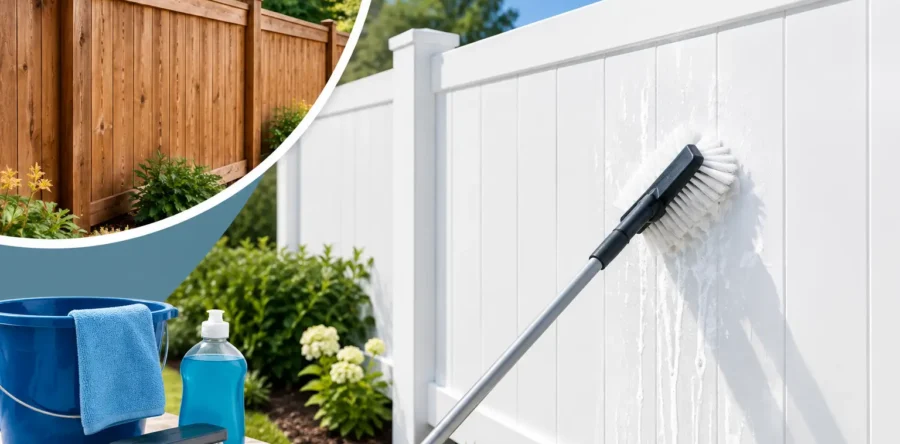
A vinyl fence can look dusty long before it is actually dirty. In Ventura County and other Southern California communities, windblown soil, irrigation overspray, marine air, and mildew can leave white vinyl looking dull or streaked. Knowing how to clean vinyl fencing correctly helps restore its appearance without scratching the surface, weakening the material, or creating a bigger maintenance problem.
Vinyl is valued because it does not rot, peel, or require regular painting. That does not mean it is maintenance-free. A simple, consistent cleaning routine protects curb appeal and makes it easier to spot loose hardware, damaged panels, or shifting posts before those issues grow.
Start With the Least Aggressive Method
Most vinyl fencing needs nothing more than water, mild soap, and a soft brush. Starting gently matters. Harsh solvents, abrasive scrubbers, and overly strong pressure can leave a vinyl surface permanently dull or damaged.
Choose a cool part of the day if possible. Direct sun can dry cleaning solutions onto the fence before you rinse them away, leaving residue or streaking. Move outdoor furniture, planters, and other items away from the fence line, then rinse nearby plants and soil with plain water before and after cleaning.
For routine dirt, mix a small amount of mild dish soap with warm water in a bucket. Use a garden hose to wet a manageable section of fencing, then wash it with a soft sponge, microfiber cloth, or soft-bristle brush. Work from the top down so dirty water does not run over an area you have already cleaned.
Rinse each section thoroughly before moving on. Soap residue attracts dust, particularly in dry, windy areas, so a complete rinse is worth the extra minute.
How to Clean Vinyl Fencing Step by Step
Rinse away loose dirt first
Before scrubbing, use a garden hose with a standard spray nozzle to remove loose dust, cobwebs, grass clippings, and mud. This prevents grit from being rubbed across the fence during washing. Pay attention to the lower rails, post bases, and the spaces around pickets, where debris tends to settle.
A pressure washer can be useful for a large ranch, estate, or commercial perimeter, but it is not automatically the better choice. Use low pressure, keep the nozzle moving, and stand well back from the panel. A concentrated stream used too close can scar vinyl, force water into joints, or damage older, brittle components. If you are unsure about the fence's condition, a hose and soft brush are the safer option.
Wash with soap and a soft brush
Apply the mild soap solution to a small area and allow it to sit briefly, but do not let it dry. Gently scrub textured surfaces, rails, caps, and grooves where dirt collects. A soft brush with an extended handle can make cleaning tall privacy panels easier without leaning a ladder against the fence.
Avoid steel wool, stiff deck brushes, scouring pads, and powdered abrasive cleaners. Vinyl can seem tough, but scratches catch dirt and can make a clean fence look hazy in bright sunlight.
Treat mildew, algae, and organic staining carefully
Green or black spotting is usually mildew or algae, especially where a fence stays shaded, receives frequent sprinkler spray, or sits near dense landscaping. For these stains, try a cleaner labeled as safe for vinyl first and follow its dilution and rinsing directions exactly.
A diluted household bleach solution may help with stubborn biological staining, but it should be used cautiously. Never mix bleach with other cleaners, especially products containing ammonia or acids. Protect your skin and eyes, keep the solution off nearby plants as much as possible, and rinse vegetation and fencing thoroughly. Test any cleaner on an inconspicuous section before treating a highly visible panel.
If the staining returns quickly, cleaning alone may not solve the cause. Redirecting sprinkler heads, trimming back vegetation for airflow, and clearing damp debris from the bottom rail can reduce repeat growth.
Address sprinkler marks and mineral deposits
Hard-water overspray can leave chalky white spots or crusty mineral buildup. Mild soap may remove fresh marks, while older deposits may need a vinyl-safe cleaner intended for mineral stains. Do not reach for aggressive acidic products without checking the label. What removes mineral deposits from masonry or metal may discolor or damage a vinyl fence.
The best long-term fix is usually preventing repeated overspray. A fence should not have to absorb a daily blast from a sprinkler system.
What Not to Use on Vinyl Fencing
A few common cleaning shortcuts create avoidable damage. Skip paint thinners, acetone, gasoline, and solvent-based products. They can soften, discolor, or permanently alter vinyl. Avoid using a wire brush or abrasive pad, even on a stubborn scuff.
Be cautious with products marketed as heavy-duty degreasers. Some are appropriate only when heavily diluted, while others are not recommended for vinyl at all. Read the manufacturer instructions rather than assuming a stronger cleaner will produce a better result.
It is also wise to avoid painting over stains unless the fence manufacturer specifically allows it. Paint can peel, trap moisture and dirt, and turn a low-maintenance fence into a recurring maintenance project.
Handling Scuffs, Rust Marks, and Stubborn Spots
Black scuffs often come from trash cans, lawn equipment, shoes, or moving furniture. Start with soapy water and a microfiber cloth. If that does not work, use a vinyl-approved nonabrasive cleaner on a test spot first. Gentle pressure is more effective than aggressive rubbing.
Rust-colored stains often come from nearby metal hardware, landscape fixtures, or irrigation components. Remove the source of the rust before cleaning the fence, or the mark will return. A specialty cleaner may be needed for the remaining stain, but it should be clearly approved for vinyl surfaces.
For stains that will not lift, do not keep escalating the cleaning strength until the fence is damaged. A professional fencing contractor can help determine whether the issue is surface contamination, discoloration from a chemical, or a material problem that requires a repair or replacement section.
A Simple Cleaning Schedule That Works
For most homes, rinsing the fence a few times a year and washing it once or twice annually is enough. Fences near the coast, beneath trees, along heavily landscaped yards, or exposed to frequent irrigation may need more attention.
Cleaning is also a good time to inspect the fence. Look for cracked caps, loose rails, leaning sections, separated pickets, and gate hardware that no longer closes smoothly. Vinyl panels may be low maintenance, but the structural system behind them still matters. A quality installation with properly set posts and durable components is what keeps panels aligned through years of sun, wind, and daily use.
When Cleaning Reveals a Bigger Fence Problem
A fence that looks dirty may actually be showing signs of age or poor construction. Persistent gaps, bowed rails, wobbly posts, and panels that shift in the wind are not cleaning issues. Neither are repeated cracks around fasteners or a gate that drags after every seasonal change.
For homeowners who need a vinyl fence repaired or replaced, All Season Fencing provides direct, professional guidance on material quality, construction methods, and the right solution for the property. A clean fence should look good, but more importantly, it should continue providing privacy, pet safety, and dependable perimeter protection.
Treat vinyl cleaning as basic property care rather than a major project: use mild products, rinse thoroughly, correct the source of recurring stains, and ask for help when the condition of the fence itself raises questions.