
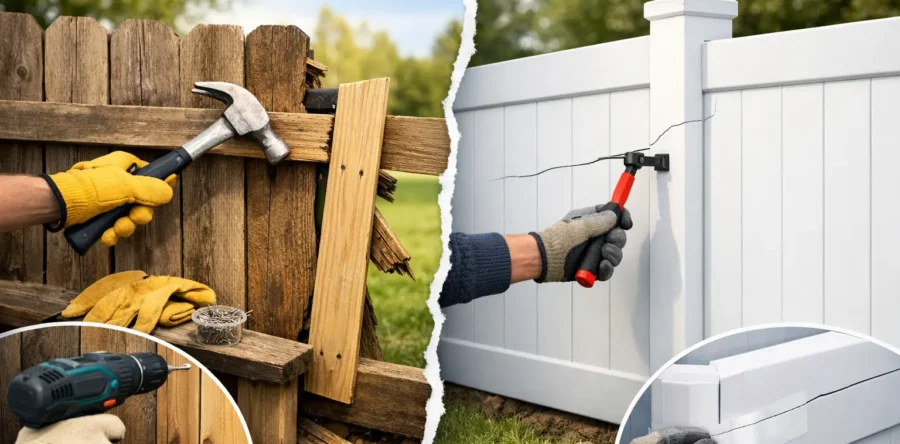
A leaning section, loose boards, rusted chain-link, or a post that moves when you press on it can turn a good boundary into a growing property problem. Timely fence repair protects privacy, keeps pets safely contained, preserves curb appeal, and prevents a smaller failure from becoming a full replacement project. The right fix depends on what failed, why it failed, and whether the surrounding structure still has years of service left.
For Southern California property owners, sun exposure, dry soil, coastal moisture, wind, irrigation, and everyday wear all take a toll in different ways. A repair that looks acceptable on day one can fail quickly if the underlying post, footing, fastener, or material is not addressed correctly.
When Fence Repair Is the Smart Choice
Repair is often the best value when the damage is isolated and the overall fence remains structurally sound. A single broken board, a cracked vinyl panel, a bent section of chain-link, or one weakened post does not automatically mean the entire run needs to come down.
The key question is whether the issue is local or systemic. If one post has deteriorated because a sprinkler repeatedly soaked it, replacing that post and correcting the water exposure may solve the problem. If several posts are soft, leaning, or splitting, the fence is telling you that the support system has reached the end of its useful life.
A professional inspection should look beyond the obvious damage. A board may be loose because its fasteners have failed, but it may also be loose because the rail behind it has warped. A vinyl panel may have cracked after impact, but an installer should also confirm that the adjacent posts are plumb and properly supported. Surface repairs without structural checks are how customers end up paying twice.
Signs You Should Not Put Off the Work
Do not wait on repairs when a fence is leaning, posts are moving in the ground, wood has visible rot near the soil line, or damaged sections are creating a gap for pets. Commercial and ranch properties should act quickly when a compromised perimeter affects security, livestock containment, or access control.
You should also pay attention to recurring trouble. Repeatedly reattaching the same boards, tightening the same hardware, or straightening the same section usually means there is a larger support issue. Small repairs are worthwhile when they extend the life of a solid fence. They are not worthwhile when they only hide an ongoing failure.
The Real Cause of Most Fence Damage
Most fencing damage begins at the posts. Panels and boards get the attention because they are visible, but posts carry the load. When a post rots, corrodes, shifts in weak soil, or was set too shallow in the first place, the rest of the fence starts to follow.
Wood fences commonly fail where the post meets the ground. Moisture, irrigation overspray, and soil contact create ideal conditions for decay. Sun can also dry and split lumber over time, especially where lower-quality materials were used or where protective maintenance was ignored.
Vinyl is highly resistant to rot and does not need staining, but it still relies on a properly engineered post system. Poorly supported vinyl can lean, rack, or crack under wind pressure and impact. Chain-link can last for decades, yet corrosion, bent framework, and loose fabric can undermine its performance if repairs are delayed.
This is why material alone is not a guarantee of durability. Quality fence repair starts with sound construction decisions: correct post spacing, appropriate depth, stable concrete footings where needed, compatible fasteners, and materials selected for the property’s exposure and purpose.
Fence Repair by Material
Wood Fencing
Wood repair can range from replacing individual boards to rebuilding a damaged section with new rails and posts. Redwood and cedar are popular choices because they offer natural beauty and better resistance to decay than many lower-grade alternatives. Even so, no wood fence is maintenance-free. It needs occasional inspection for splitting, warping, loose fasteners, and moisture damage.
When replacing only part of a wood fence, appearance can be a trade-off. New lumber may not match weathered boards immediately. A careful contractor can select compatible material and align the repair cleanly, but natural aging will still affect color. For many homeowners, a structurally correct repair matters more than an exact day-one color match.
Vinyl Fencing
High-quality vinyl is a strong option for homeowners who want privacy and pet containment with minimal routine upkeep. When damage occurs, individual components can often be replaced if the post system is stable and the product profile is available.
The challenge is that not all vinyl is built the same. Thin-wall material, undersized posts, and poor installation can lead to sagging and cracking that no replacement panel will truly fix. If the structure is compromised, a proper repair may involve resetting posts or rebuilding the affected run rather than forcing new pieces into an unstable frame.
Chain-Link and Large-Property Fencing
Chain-link repairs often involve tightening or replacing fabric, repairing bent rails, resetting posts, or correcting sections that have been pulled out of alignment. On large residential lots, commercial sites, farms, and ranches, a small weak point can affect a much larger perimeter.
The right approach depends on the fence’s job. A light residential boundary does not require the same framework as a long agricultural enclosure or a commercial perimeter exposed to heavier use. Matching the repair to real site conditions prevents underbuilding and helps control long-term maintenance costs.
Why Post Upgrades Matter During a Repair
When a damaged wood or vinyl fence needs post work, that is the time to consider a better support system. Postmaster metal posts are designed to provide long-term strength while staying concealed behind the fence face. They do not rot like wood, and they offer a substantial upgrade in areas where wind, moisture, or soil movement have contributed to repeated failures.
A post upgrade costs more upfront than replacing a damaged wood post with another basic wood post. But the lower-cost option can be expensive if the same location fails again in a few years. For a privacy fence, a long run, or a property where appearance and stability matter, stronger posts can make the repair a better long-term investment.
Not every repair requires a full post-system upgrade. A short, isolated repair on a newer fence may be well served by matching the existing construction. The contractor’s job is to explain the options plainly, including where spending more will actually provide a return and where it will not.
Protect Yourself From Poor Repair Work
Fence repair should not be treated as casual handyman work when posts, property lines, major sections, or commercial requirements are involved. Ask whether the contractor is licensed for fencing work, bonded, insured, and prepared to provide a written scope of work. In California, customers should also understand applicable CSLB down-payment rules and avoid contractors who demand unreasonable money before materials or work are properly scheduled.
A clear proposal should identify what will be repaired, what materials will be used, whether posts or footings are included, and how debris will be handled. It should also explain what cannot be guaranteed when tying new materials into an older fence. Honest contractors do not promise a repair will make a worn-out structure new again.
Clean work matters, too. A repair project may be smaller than a new installation, but crews should still protect the property, remove damaged materials, and leave the site orderly. Responsive communication and a straightforward answer to questions are part of professional service, not an extra.
Know When Replacement Is the Better Value
There comes a point when repair becomes a series of temporary patches. If damage appears across multiple sections, posts are failing throughout the line, materials are heavily weathered, or the fence no longer meets the property’s privacy or containment needs, replacement may cost less over time.
Replacement also gives property owners the chance to correct past compromises. That may mean upgrading from deteriorated wood to vinyl, selecting better-grade redwood or cedar, installing stronger Postmaster metal posts, or designing a custom fence that better fits the property. The best choice is not always the cheapest immediate option. It is the option that performs well for the years you expect to own and use the property.
For homeowners and property managers in Ventura County and surrounding communities, an on-site evaluation is the fastest way to get a straight answer. All Season Fencing provides professional proposals based on the actual condition of the fence, not a one-size-fits-all sales pitch. Contact Seth to discuss the damage, ask practical questions, and get a clear path forward before a manageable repair becomes a bigger project.