
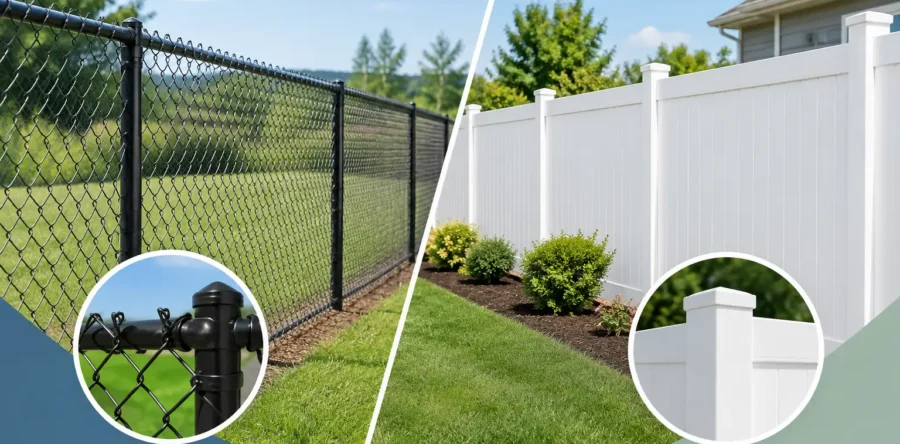
A fence can solve very different problems. A dog that keeps finding the open side yard needs dependable containment. A backyard facing close neighbors needs privacy. A ranch entrance, equipment yard, or side boundary may simply need a long-lasting perimeter. When comparing chain link versus vinyl, the right answer depends less on which material is “best” and more on what the fence must do every day.
Vinyl and chain link are both durable alternatives to aging wood, but they deliver very different results in privacy, appearance, security, maintenance, and upfront cost. A clear comparison helps property owners spend their budget on the fence that actually fits the property.
Chain Link Versus Vinyl at a Glance
Chain link is a practical, open-mesh fence built around galvanized steel posts, rails, and wire fabric. It is commonly selected for pet runs, side yards, large boundaries, commercial spaces, agricultural properties, and anywhere visibility matters. It is efficient over long runs and offers a strong physical boundary without blocking the view.
Vinyl fencing uses solid panels, pickets, rails, and posts to create a more finished residential appearance. It is often the better choice for backyard privacy, pool-area separation, clean curb appeal, and families who want an enclosure without routine painting, staining, or board replacement.
Neither choice should be treated as a commodity. The strength of either fence depends on the grade of material, post spacing, depth and quality of footings, gate construction, terrain, and whether the installer takes time to build straight lines and properly tension the system.
When Chain Link Is the Better Choice
Chain link makes sense when the priority is functional containment at a sensible cost. For a large lot, ranch area, kennel run, business yard, or side boundary, its open design can cover substantial distances without the material expense of a full privacy fence. It also allows air and light through, which can be valuable where a solid fence would make an area feel closed in.
For pet owners, chain link can be an excellent solution when it is installed at the appropriate height and with secure gates. A properly built system keeps most dogs safely contained while allowing them to see beyond the fence. That visibility can be a benefit for some properties, although reactive dogs may be more likely to bark or pace when they can see passersby.
Chain link also performs well in exposed locations because wind passes through the mesh rather than pushing against a solid panel. On larger properties around Ventura County and neighboring communities, that can make it a practical perimeter option. Galvanized components resist corrosion, while black or green vinyl-coated chain link can provide a softer, less industrial appearance.
The trade-off is privacy. Privacy slats can reduce visibility, but they do not create the clean, fully enclosed look of a solid vinyl panel. Slats can also add wind resistance, fade over time, and leave gaps that homeowners did not expect. If privacy is the primary goal, starting with a privacy fence is usually the better long-term decision.
Chain Link Is Often Best For
Chain link is usually a strong fit for pet enclosures, large property lines, utility areas, equipment storage, athletic spaces, commercial yards, and properties where visibility is preferred. It can also be a smart choice when a durable boundary matters more than decorative curb appeal.
When Vinyl Is the Better Choice
Vinyl is built for homeowners who want privacy, a polished appearance, and low ongoing maintenance. A solid white, tan, gray, or custom-style vinyl fence can turn an exposed yard into a more comfortable outdoor living space. It blocks direct sightlines from neighboring windows, separates play areas, and creates a clean backdrop for landscaping.
Unlike wood, high-quality vinyl does not rot, split, or need periodic staining. That does not mean it needs no care. Dust, sprinkler residue, algae, and coastal grime should be rinsed or gently cleaned as needed. Still, the routine is far simpler than scraping, painting, replacing warped boards, or dealing with recurring wood deterioration.
Vinyl is particularly attractive when curb appeal matters. A straight, well-built vinyl fence can give an older home a finished look without demanding attention every season. It is available in full-privacy panels, semi-privacy styles, picket designs, ranch rail configurations, and custom layouts that can work with gates, grade changes, and specific yard needs.
The important distinction is quality. Thin, brittle vinyl panels and undersized posts may look acceptable on day one but can become vulnerable under heat, movement, wind, and gate use. A quality installation uses strong components and considers where reinforcement is needed. For privacy fencing, metal post systems such as Postmaster posts can provide valuable structural support while keeping the finished fence clean and attractive.
Vinyl Requires Thoughtful Construction
A vinyl fence is not simply assembled above ground. Posts must be set accurately, rails must be supported correctly, and gates need proper reinforcement so they operate smoothly instead of sagging. On a long run, a contractor must also account for grade changes and the natural expansion and contraction of vinyl in changing temperatures.
This is where low bids can become expensive. Some installers reduce costs with lightweight materials, shallow footings, poor gate framing, or inconsistent spacing. The fence may look fine at first, then develop leaning posts, loose rails, or misaligned gates after normal use. A written proposal should identify the material type, post system, gate details, and scope of work so the homeowner knows what is being built.
Privacy, Security, and Pet Safety
Privacy is the clearest dividing line between these two materials. Vinyl privacy fencing provides a solid visual barrier. Chain link provides containment but leaves the property visible unless modified with slats or screening. If a family wants to enjoy the yard without feeling exposed, vinyl typically offers the better result.
Security depends on the application. Chain link is difficult to casually break through and is often a practical choice for securing larger areas. Taller systems, stronger fabric, bottom tension wire, and properly built gates can improve performance where access control is a concern. Vinyl creates a strong boundary for a residential yard, but it is generally chosen for privacy and appearance rather than an open commercial-style security application.
For pets, consider behavior as well as size. A calm dog may do well behind either fence. A small dog may need a configuration that prevents slipping underneath, while a jumper may require more height. A dog that becomes agitated by people or animals passing outside the yard may benefit from vinyl’s visual barrier. The best pet fence is one designed around the actual animal, not just the property line.
Cost Should Be Measured Beyond Installation Day
Chain link commonly has the lower initial cost, especially for long, straightforward runs. Its materials are efficient, and the open design uses less material than a solid privacy system. That can make a meaningful difference for acreage, commercial lots, and large enclosures.
Vinyl usually costs more upfront because it uses more material and requires a more finished installation. Yet its low-maintenance appeal can make the investment worthwhile for homeowners who would otherwise spend years painting, repairing, or replacing a deteriorating fence. The value is especially clear when privacy and visual impact are central to the project.
Avoid comparing estimates by the bottom-line number alone. Ask what is included: material grade, post dimensions, gate hardware, removal of old fencing, site cleanup, and the structural details that protect the fence from premature failure. A low price without those details can leave a homeowner paying twice.
How Southern California Conditions Affect the Choice
Southern California fences contend with intense sun, dry heat, occasional high winds, irrigation overspray, and, in coastal areas, salt air. Both vinyl and galvanized chain link can perform well, but material quality matters. UV-resistant vinyl is important for maintaining color and flexibility, while properly galvanized steel components help chain link resist corrosion.
Wind exposure deserves special attention. Chain link naturally allows wind to pass through. A solid vinyl privacy fence needs a support system designed for its height, length, and exposure. That does not make vinyl a poor choice in windy areas. It means the posts and installation approach must match the conditions rather than relying on the lightest available components.
Choose the Fence That Solves the Real Problem
Choose chain link when you need economical, durable containment, visibility, and coverage across a larger area. Choose vinyl when privacy, low maintenance, and a finished residential appearance are higher priorities. Some properties benefit from both: vinyl around the main living area and chain link around a side yard, animal area, or extended boundary.
A good fence decision starts with an honest look at how you use the property, what you want to see from your windows, and what needs to stay safely inside or outside the boundary. All Season Fencing can help homeowners, ranch owners, and businesses evaluate those details with a clear proposal, quality materials, and direct guidance before construction begins.