
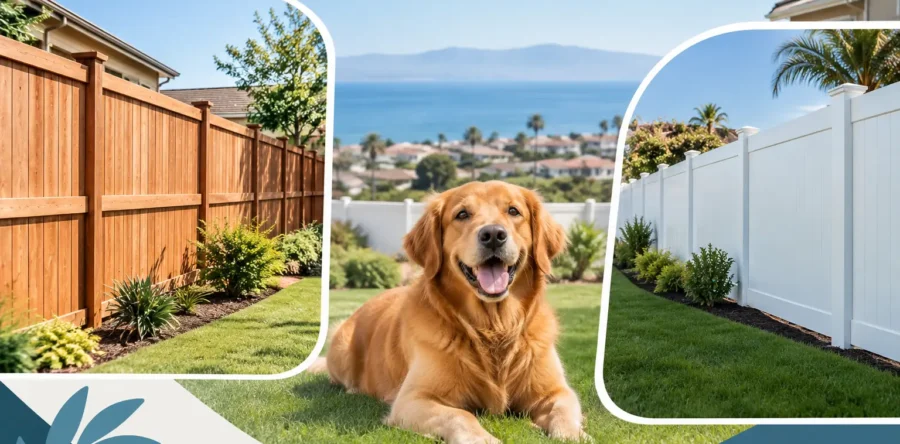
A fence that looks good from the street is not automatically safe for a determined dog. The best dog fences Oxnard homeowners choose are built around the dog's size, behavior, and pressure points, while standing up to sun, wind, moisture, and years of daily use. A small dog that squeezes through openings needs a different solution than a large dog that leans, jumps, digs, or patrols the property line.
For pet owners, fencing is not just a curb-appeal project. It is a safety barrier that should give you confidence when your dog is in the yard. The right material matters, but so do post depth, rail strength, gate construction, gaps near the ground, and the quality of the installation. Those details are where inexpensive work often falls short.
What Makes the Best Dog Fences in Oxnard?
The best choice depends on how your dog behaves, how much privacy you want, and whether the fence borders neighbors, open land, a driveway, or a busy street. There is no single fence material that works for every property. The goal is a system that controls access without becoming a recurring repair project.
A dog fence should be tall enough for the dog you have now and the dog you may have later. Many medium and large dogs can clear a low fence when excited, especially if they can see another animal, pedestrian, or delivery vehicle. A taller privacy fence can reduce those visual triggers while creating a more comfortable yard for the household.
Strength at the posts is equally important. Fence panels may look solid on installation day, but weak posts can shift, lean, or loosen over time. For privacy and pet barriers, high-grade materials and steel Postmaster posts create a much stronger foundation than basic wood posts alone. The post is the structural component carrying the load from wind, gates, and a dog repeatedly pushing against the fence line.
Vinyl Fencing for Clean, Private Pet Yards
Vinyl is often an excellent option for homeowners who want privacy, clean lines, and lower routine maintenance. A properly built vinyl privacy fence creates a solid visual barrier, which can help dogs that bark at activity on the other side of the yard. It also has no exposed splinters, nails, or rough surfaces that can create problems for active pets.
Quality matters with vinyl. Thin, low-grade panels can become brittle, discolor, or flex too much under normal use. A professionally installed vinyl system uses durable components, properly supported posts, and gates that are reinforced for repeated opening and closing. That is particularly important when a gate is part of the daily dog-walking routine.
Vinyl does have trade-offs. It is not the right choice for every custom layout or every property with unusual grade changes. It also needs careful installation so sections remain aligned and secure. When privacy and a polished, low-maintenance appearance are priorities, however, vinyl is one of the strongest choices for a residential dog enclosure.
Pay Attention to the Bottom Edge
Dogs do not need much room to begin digging or squeezing under a fence. A quality installation accounts for grade changes and keeps the bottom line controlled without leaving tempting gaps. On uneven ground, a fence may need to step with the slope or use a custom approach that protects the opening along the bottom.
This detail is easy to overlook during a quick quote. It is also one of the most common reasons homeowners later discover their dog can get out.
Wood Fencing for Custom Shapes and Solid Coverage
Wood fencing remains a practical option when a property needs a custom design, a specific height, or a natural appearance. It can be built to follow challenging yard conditions and can provide a strong visual barrier for dogs that react to neighboring activity.
The durability of a wood fence depends heavily on the materials selected and the construction behind the visible boards. Quality rails, fasteners, post installation, and spacing all affect how the fence performs over time. In Oxnard and nearby coastal communities, outdoor exposure can be demanding, so homeowners should expect wood fencing to need periodic inspection and maintenance.
For dogs that lean or jump against the fence, the frame matters more than decorative board placement. A solid-looking fence with underbuilt rails or poorly supported posts can loosen long before the surface boards appear worn. A contractor should explain what is supporting the fence, not simply show you a sample panel.
Chain-Link Fencing for Larger Enclosures
Chain-link fencing is a dependable choice for large yards, side runs, ranch properties, and areas where visibility is useful. It is often more economical for long runs than a full privacy fence, and it can create a secure boundary without closing off views across the property.
For pet containment, chain-link must be selected and installed with the dog's size and habits in mind. The mesh opening should not allow a small dog to push through, and the bottom edge needs to be secured against digging. Larger dogs benefit from a heavier framework and sufficient height. If a dog is reactive, a privacy screen or a different fence style may be better than open chain-link because it limits what the dog can see beyond the property.
Chain-link also works well as part of a larger fencing plan. A homeowner may choose a privacy fence along street-facing or neighbor-facing areas, then use chain-link for a larger side yard, rear enclosure, or utility area. This approach can balance appearance, function, and budget without compromising pet safety.
Gates Are the Most Important Moving Part
A dog fence is only as dependable as its gate. Gates receive more use, more weight, and more stress than the fixed sections of a fence. If a gate drags, sags, does not latch consistently, or has gaps around its edges, it can become the weak point in an otherwise secure enclosure.
A good pet gate should close squarely, use durable hardware, and have a latch that is difficult for a dog to bump open. Self-closing or self-latching hardware can add another layer of protection in high-traffic areas, particularly when children, guests, gardeners, or service providers access the yard.
Think about how the gate will be used before construction begins. A narrow walk gate may be right for daily access, while a wider gate may be necessary for equipment, trash bins, or yard service. Planning this up front prevents the frustration of trying to make one undersized gate serve every purpose.
Match the Fence to Your Dog's Actual Habits
The most useful question is not, What fence is cheapest? It is, How does my dog challenge a boundary? A calm senior dog may only need a simple, attractive enclosure. A young athletic dog may need added height, stronger framing, and a carefully controlled bottom edge. A digger may need a specialized barrier at ground level, while a dog that barks at passersby may benefit from full privacy.
Watch where your dog spends time in the yard. Do they run the same stretch of fence? Push against a gate? Dig near a corner? Focus on a neighbor's dog? Those observations help identify the right design before materials are ordered.
Avoid making a decision based only on a fence's appearance or an unusually low price. Low bids can leave out structural upgrades, quality hardware, cleanup, or the details needed for a durable installation. A clear written proposal should identify the material, height, post system, gate plan, and scope of work so you know what you are paying for.
Choose a Contractor Who Builds for the Long Term
Pet fencing deserves the same care as any other major exterior improvement. Work with a licensed, bonded, and insured fencing contractor that can explain why a recommended system fits your property. Ask direct questions about materials, posts, gates, installation methods, and expected maintenance. A professional contractor should answer clearly rather than push a one-size-fits-all product.
All Season Fencing provides tailored pet safety barriers, privacy fencing, chain-link enclosures, and custom fence construction for homeowners and larger properties throughout the area. As a veteran-owned contractor, the focus is on honest recommendations, high-grade materials, clean job sites, and work built to hold up.
Your dog should be able to enjoy the yard without turning every outdoor moment into a worry. A well-planned fence gives them room to move and gives you a boundary you can trust. Contact Seth for a fast, friendly, free professional proposal based on your property and the way your dog actually lives.